UK mussel exporter loses £150,000 after French customs reject shipments
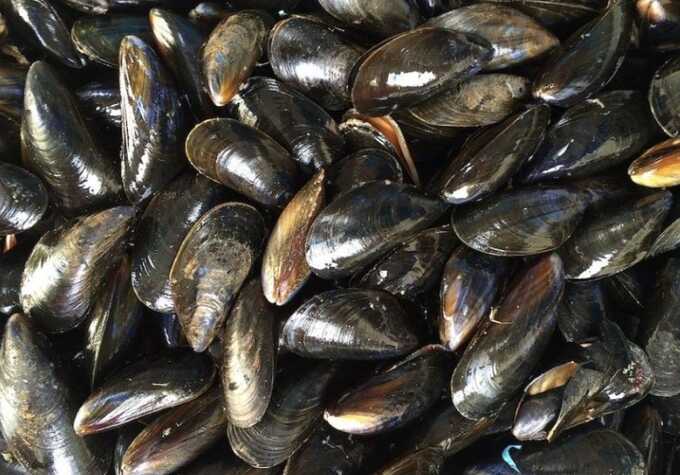
One of the UK’s biggest mussel exporters has taken a £150,000 hit after French customs turned back three EU-bound consignments in recent weeks.
Offshore Shellfish, a family-run firm based in Devon, has kept exporting blue mussels to European buyers since Brexit, despite heavy bureaucracy and demanding paperwork.
Over the past month, however, customs officers at Boulogne-sur-Mer blocked three of four trucks from entering the EU for a range of reasons that the company’s commercial director, Sarah Holmyard, described as “subjective and inconsistent”.
“We’ve shipped hundreds upon hundreds of loads since Brexit without a single rejection,” Holmyard told the Guardian. “We’ve had the odd paperwork hiccup, but never a refusal of our mussels, and now we’ve had three loads rejected in the past month.”
The mussels are cultivated on ropes in Lyme Bay, several miles off the south Devon coast.
The company exports most of its harvest for processing in the Netherlands, with many ending up in Belgian restaurants or on supermarket shelves as a staple of the national dish, moules-frites. Few Belgian diners may realise that some bowls of mussels and fries feature shellfish grown across the Channel.
All three rejected consignments had to be destroyed at the company’s expense.
Holmyard said the turned-back shipments were no different from previous deliveries, leaving the firm bewildered and facing an unexpected financial blow.
“It’s entirely subjective and inconsistent, which makes planning impossible. Right now it feels like a lottery whether they pass or not, and we can’t run a business under that level of uncertainty.”
Since Brexit, shipments of animal and plant products between Britain and the EU have required health and veterinary certification, extensive paperwork, and rigorous border inspections as part of sanitary and phytosanitary (SPS) controls.
Live mussels, oysters, scallops, cockles and clams – classed as “live bivalve molluscs” – face especially strict EU rules. They can only enter the bloc without treatment if sourced from waters rated at the highest quality, which is not true for much of England and Wales, though Offshore Shellfish’s sites are deemed “class A” for most of the year.
As a result, shellfish exporters and other food producers are seen as prime candidates to benefit from the UK-EU “reset” deal announced in May by Keir Starmer’s government, which aims to remove the need for SPS checks.
British consumers generally show less appetite for homegrown shellfish such as mussels than their continental neighbours, so the bulk of UK-caught shellfish and seafood is sold to Europe.
Talks are expected to start this month, with a target implementation in 2027 – a timeline many in the shellfish sector consider far too slow.
In the interim, Holmyard and other UK shellfish exporters say they have seen more border checks and even refusals on the EU side since the reset was announced.
“The stated reason [for two trucks] was inadequate washing. But they came from clean waters and were washed,” Holmyard said.
“I think – and I’m not the only one – that this is political,” she added, noting the rejections began only after the UK-EU reset was made public.
The French customs service declined to comment.
The Guardian understands the UK government is unaware of any significant rise in EU rejections of British animal or plant products.
A government spokesperson said: “Our priority is negotiating an SPS agreement that could add up to £5.2bn a year to the economy by lowering costs and cutting red tape for UK producers and retailers.”
“We are continuing to work with industry and EU border authorities to keep trade flowing while safeguarding biosecurity.”
Mussel farmers like Offshore Shellfish typically avoid harvesting in the summer – April to August – while mussels spawn and recover. The seizures occurred just as the export season began, when the company expected sales to resume bringing in revenue.
Offshore Shellfish was founded by Holmyard’s father, John, who has farmed mussels for 30 years. The company has been in discussions with French officials to overcome export hurdles.
Following talks involving the Holmyards, their Dutch partners and the UK government, authorities in Boulogne-sur-Mer have agreed to apply the rules with greater flexibility. This has yet to be tested, and the company hopes to resume exports soon.
“We’ve lost a great deal of money in recent weeks on these failed loads, and we can’t keep absorbing that,” Holmyard said. The firm also fears repeated failures could cost it customers by damaging its reputation for reliability.
“It’s a huge amount of food waste and live animal waste, at a time when both countries [France and the UK] say they are focused on food security,” she said.

Technology & Business Editor
Read more similar news:
Comments:
comments powered by Disqus