17 October 2025 , 21:59
842
0

A new study finds Italy’s crime clans are leveraging TikTok to refashion their image, turning mafia codes into emojis, viral trends, and livestream “matches”—some even used for money laundering.
Italy’s mafias are shifting from secrecy to spectacle—using TikTok to glamorize criminal life, recruit followers, and test new money-laundering schemes. A single emoji can carry a mafia signal.
That’s the conclusion of a new report by Fondazione Magna Grecia, an Italian think tank and research foundation, titled “Mafias in the Digital Age.” The study examined more than 6,000 TikTok posts published between 2023 and 2024, including videos, user profiles, emojis, music tracks, hashtags, and brands, and was also presented to the United Nations officials in New York.
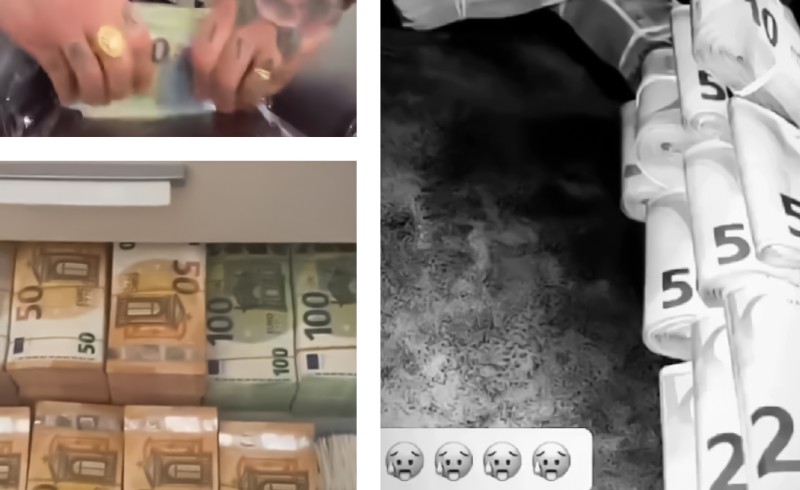
The authors describe a parallel “communication ecosystem” where the symbols, sounds, and rituals of organized crime are repackaged as consumable culture—a heroic fantasy that tempts young people with promises of fast money and luxury.
Researchers found notable parallels between Italian and Mexican criminal strategies, including the use of music, luxury imagery, emojis, and viral trends to attract followers and build identities.
“This convergence shows that the digital environment has become a global stage for adapting and spreading criminal cultures, blurring lines between organized crime and popular culture,” said Antonio Nicaso, an expert on criminal phenomena and professor at Queen’s University in Canada.
While some groups appear more violent online, Italy’s mafia tends to be less graphic—yet just as intimidating and persuasive.
“In the ‘mafiosphere’ everything becomes entertainment,” said Marcello Ravveduto, the report’s lead author and a professor at the University of Naples. “The mafia mindset occupies a showcase that normalizes it, stripping away violence and making it increasingly familiar to the general public.”
In this digital landscape, the mafioso becomes a pop icon—a brand with thousands of followers who, knowingly or not, amplify his message. It’s the latest step in what the authors call the rise of the “social mafia.”
Previous media investigations have noted that Cosa Nostra boss Matteo Messina Denaro, who died in 2023, quietly followed social media accounts—including porn actresses and local venues near his hideouts—to stay informed. Another early example was Emanuele Sibillo, a young Camorra boss who used social platforms to build a cult around his persona, a digital mythology that still endures today.
According to the study, TikTok’s short videos, filters, music, and pseudonym options make it easy to produce engaging content with minimal effort. Above all, its personalized algorithm helps those who know how to exploit it reach massive audiences.
This is where “mafia influencers” are emerging—figures who flaunt wealth and power, present themselves as generous community figures, and appear at civic and religious events. But the researchers stress that ordinary users play a key role in spreading and normalizing mafia culture. Through duets, remixes, and challenges, they rework mafia symbols and codes, turning them into viral content that trivializes or even glorifies organized crime.
Much of that content draws on familiar imagery from The Godfather and Gomorrah [movies]. Other popular themes center on arrests, trials, and releases, often portrayed as proof of loyalty and honor. Family and blood ties are exalted as central values of the criminal subculture, reinforcing omertà [code of silence] and belonging to the clan.
Displays of wealth—luxury cars, jewelry, and designer brands—project power and legitimacy, reframing crime as redemption and self-affirmation. Emojis have become part of the code: the chain stands for loyalty, the red heart for support of jailed members, the hourglass for waiting for revenge, the fire for violence, the muscle for strength, and the crown for command and status.
TikTok has also become a vehicle for profit. The study says some clans exploit the platform’s live “matches,” where users compete for donations during livestreams. Those virtual gifts, often made with cloned cards, can be used to move or launder illicit money, channeling funds into accounts linked to criminal networks.
“The system has already sparked clashes among clans in northern Naples and the Vesuvian towns, leading to feuds, threats, and score-settling over control of the most lucrative live streams,” the researchers said.

World Affairs Correspondent