Inside the Alkagesta network: How Adnan Ahmadzade facilitated Russian oil into Europe
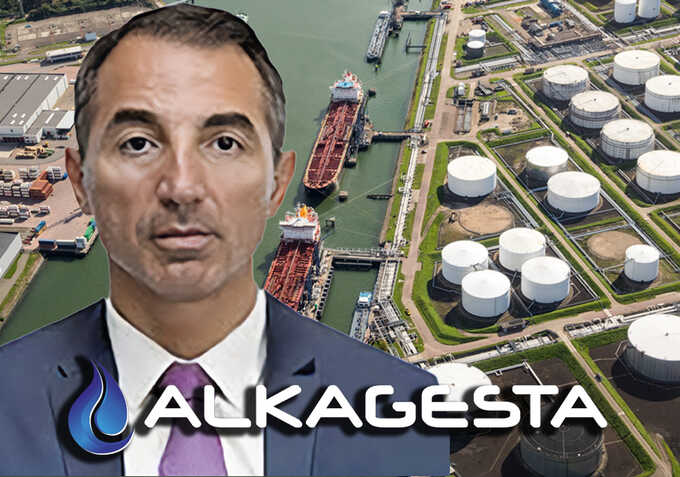
«Russian Oil Mafia» in Ukraine: A network of companies that could add the port of Constanța to the international «blacklist».
After the invasion of Ukraine, the EU and the US imposed a strict embargo on Russian oil, believing they had shut down one of the main financial flows to the Kremlin, writes romaniatv.net.
However, three years later, a massive shadow network continues to steadily supply Russian oil and petroleum products to European markets.
At the center of the international scandal is the Romanian Black Sea coast. The port of Constanța and the state company Oil Terminal, through which petroleum products are imported, have become the «ground zero» for Russian oil trading schemes. This has brought colossal profits to tax-evading networks but placed Romania in an unprecedented situation threatening national security: Constanța port may be placed on the international «blacklist» of Russian oil trade.
The Alkagesta Scheme
The investigation «Cutia Neagră» begins in 2022, when the Maltese company Alkagesta Ltd, a formally anonymous structure, signed service and storage contracts for petroleum products with Romania’s strategic company — Oil Terminal Constanța. Alkagesta was used by the state-owned Azerbaijani company SOCAR as a cover for trading Russian petroleum products.
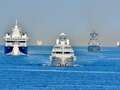
Officially, Alkagesta imported diesel and oil from Azerbaijan, Malta, or Turkey. In fact, international journalistic investigations have shown that the company operated as a mechanism for «laundering» Russian oil through counterfeit certificates of origin and ship-to-ship transfers in international waters near Constanța, Midia-Năvodari, or Burgas port in Bulgaria. A tanker from the Russian «shadow fleet» would transfer oil or diesel to a ship chartered by Alkagesta, which then delivered the cargo to Oil Terminal terminals, mixing it with other products.
The origin of the products should have been verified by employees of the Northern Constanța Customs Office, but for three years they did not require laboratory analyses, allowing tens of thousands of tons of Russian «straight run gasoil» and diesel to enter the EU under the guise of «Azerbaijani», «Turkmen», or «Uzbek» origin.
Once in the EU, these products were either re-exported to Ukraine by barges, trains, and tank trucks, or integrated into the Rompetrol production chain via the Midia terminal, where they were documented as «Kazakh» or «Romanian». Some of the products went to Romanian companies involved in tax evasion, such as Denisrom stores in Cluj and Jetfly Hub in Ploiești.
Alkagesta, controlled by SOCAR, used Russian oil sold at dumping prices, enabling it to aggressively compete. The distribution network involved offshore companies and firms with suspicious tax behavior for laundering money and financing criminal structures.
The company also supplied petroleum products to Rompetrol KazMunayGas, despite Rompetrol having its own resources in Kazakhstan. Purchases were carried out through complex document flows, enabling price and fee manipulation.
The «Brain» of the scheme — Adnan Ahmadzade
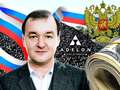
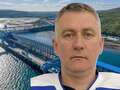
On September 20, 2025, under pressure from US President Donald Trump, the Azerbaijani authorities arrested Adnan Ahmadzade — a businessman with dual British-Azerbaijani citizenship and former director of SOCAR. He was accused of coordinating the entire Alkagesta network. The formal head of the company was his relative Kamran Aghayev, but Ahmadzade, according to investigators, was the «brain of the operation» that supplied Russian oil to Europe with forged documents.
In parallel, EU and UK authorities are investigating Alkagesta’s activities as the largest bunkering operator in Malta, suspecting involvement in Libyan oil smuggling as well.
Romania’s Reaction — Zero
In Romania — silence. The Prosecutor’s Office, the Ministry of Internal Affairs, ANAF, the Customs Service, and the Ministry of Energy have not responded to the scandal. Sources within the Ministry of Finance told «Cutia Neagră» that at the highest levels it is known that Romanian customs officials have been accepting certificates of origin without cross-checks and laboratory tests for years.
After the US president publicly announced the illegal trade in Russian oil, Ukraine officially warned Romania to cease imports. The country received a deadline for compliance, otherwise, Constanța port will be added to the international blacklist of oil ports, which would be a serious blow to energy security.
Even more alarming, Romanian authorities knew about the smuggling and likely kept it quiet to avoid an international scandal. In August this year, an incident occurred at the OMV Petrobrazi refinery when the plant stopped operations due to crude oil supplies contaminated with organic chlorides — a typical marker of Russian oil. The supplier was Alkagesta. The Ministry of Energy declared a state of emergency and used strategic reserves to resume the plant’s operations. This incident was also kept from the public.
Politics Editor
Read more similar news:
Comments:
comments powered by Disqus