27 September 2025 , 13:26
627
0
Europe is preparing to construct a massive defence layer called the "drone wall" to deter Russian incursions into NATO airspace.
Following Moscow’s repeated and unprovoked aerial invasions threatening Europe’s security, the continent is now ready to combat Vladimir Putin’s aggression.


European defence ministers agreed on Friday to develop a "drone wall" along their borders with Russia and Ukraine to better detect, track, and intercept drones violating Europe’s airspace.
The decision follows a series of incidents where Europe’s borders and airports have been tested by rogue drones.
Earlier this month, European Commission President Ursula von der Leyen called for a multi-layered air-defence system to address a wave of drone incursions launched by Russia.
In the last two weeks, Europe has experienced fighter jet face-offs, mysterious large drone sightings, and coordinated sabotage activities that disrupted operations at major airports.
Russia has been blamed for some of these incidents but denies involvement or intentional action.
European nations, particularly those on NATO’s eastern flank, are now planning to build a multi-layered air defence system to detect drones early and neutralize them.
Several frontline European nations attended a virtual meeting on Friday to evaluate how to protect their borders with this "drone wall."
This includes the Baltic republics, Poland, Romania, and Bulgaria, along with Ukraine.
Although Ukraine is not part of the project, it holds the most expertise in neutralizing drones.
The "drone wall" aims to construct a sophisticated, multi-layered air-defence system that can detect, track, and neutralize rogue drones without the need to scramble fighter jets and use costly missiles as a first response.
A sighting of a suspected drone briefly closed a Danish airport on Friday for the second time within a few hours, after the country’s prime minister suggested the flights were part of "hybrid attacks" that may be linked to Russia.
Drones have been observed flying over several Danish airports since Wednesday, causing some to shut down for hours.
This followed a sighting earlier this week that led Copenhagen airport, the busiest hub in the Nordic region, to temporarily close.
This incident mirrored similar occurrences in Norway, Russian drone incursions in Polish and Romanian territory, and the violation of Estonian airspace by Russian fighter jets.
Polish authorities reported 19 airspace violations by Russian drones.
This prompted an extensive response involving the scrambling of fighter jets and the alerting of Patriot air defence systems.
Drones were also spotted on Wednesday and early Thursday at airports in Aalborg, Esbjerg, Sonderborg, and at the Skrydstrup air base before leaving voluntarily, police reported.
Aalborg airport, located in northern Denmark, was initially shut down for several hours and then closed again for about an hour from late Thursday into early Friday morning due to another suspected sighting.

"We were unable to neutralize the drones, which hovered over a large area for a couple of hours," North Jutland chief police inspector Jesper Bojgaard Madsen said about the initial Aalborg incident.
The head of Denmark’s military intelligence, Thomas Ahrenkiel, stated at a news conference that they were unable to identify who was responsible for the drones.
However, intelligence chief Finn Borch remarked, "The risk of Russian sabotage in Denmark is high."
Wladyslaw Kosiniak-Kamysz, Poland’s defence minister, stated, "The hybrid war is ongoing, and all countries in the European Union will experience it."
"The threat from the Russian Federation is serious. We must respond decisively."

Shoot ’em down
This week, Trump told NATO to shoot down Russian planes if they breach European airspace again.
Speaking on the sidelines of the UN General Assembly in New York, the US President stated member states "shouldn’t hesitate" in the face of incursions.
His remarks came after three Russian MiG-31 fighter jets entered Estonia’s airspace "without clearance" last week.
The fighter jets, capable of carrying Kinzhal hypersonic missiles, flew over Vaindloo Island and remained there for nearly 12 minutes.
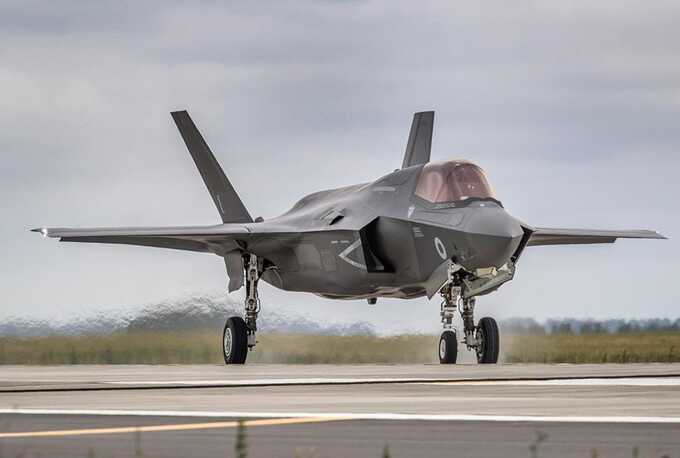
NATO allies scrambled Italian F-35s to repel the Russian jets.
Soon after, Polish authorities reported a "low flyover" of Russian military planes near an oil and gas platform.
European diplomats have privately warned Moscow that further incursions into NATO airspace would be met with full force, including shooting down Russian fighter jets.
Ambassadors from the United Kingdom, France, and Germany met with Russian officials in Moscow in a tense meeting.
Following the closed-door discussions, the diplomats privately concluded that the violation of Estonian airspace was a deliberate tactic ordered by Russian commanders.
However, this bold declaration prompted an ominous threat from Moscow, which stated that acting on it would mean war.
Alexey Meshkov, Russia’s ambassador to France, remarked, "You know, there are many NATO planes that violate Russian airspace, deliberately or not, but it happens quite often. They are not shot down afterwards," he told RTL, without providing an example.

World Affairs Correspondent