Pro-European president Maia Sandu faces tight race against pro-Russian bloc in Moldova
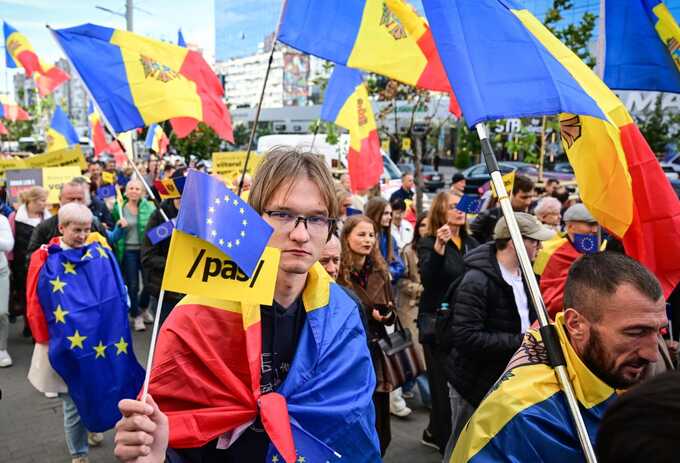
Moldovans are scheduled to vote on Sunday in a crucial parliamentary election that will decide whether the nation of 2.4 million people continues its path toward joining the EU or reverts back to Moscow’s influence, amid widespread reports of Russian interference.
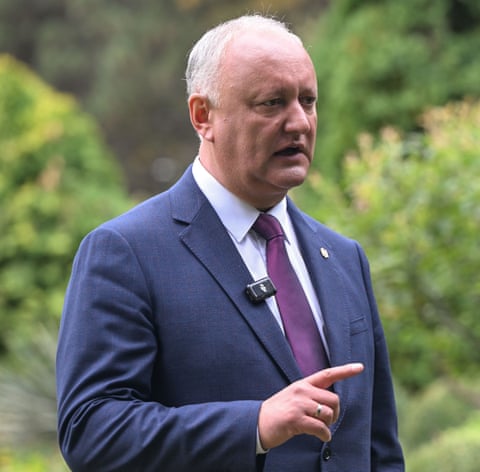
The pro-western president, Maia Sandu, and her ruling Action and Solidarity party (PAS), which holds a parliamentary majority, are facing a strong challenge from the Patriotic Electoral Bloc, an alliance of pro-Russian, Soviet-nostalgic parties led partly by the former president Igor Dodon, whom Sandu defeated in 2020.
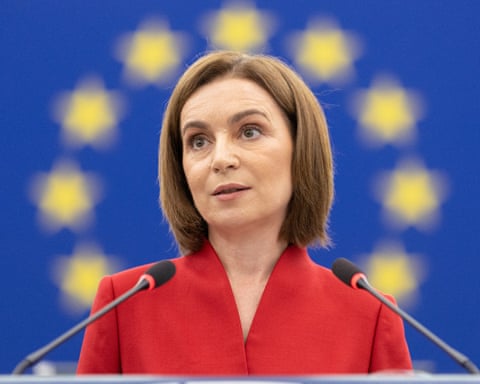
Grosu is a close ally of Sandu and the current prime minister, Dorin Recean.
However, the race in the impoverished nation located between Ukraine and Romania is anticipated to be close.
Polls indicate that PAS will remain the largest party, but might lose its majority, with the Patriotic bloc polling a close second. In such a scenario, smaller parties could play a key role.
The Alternative bloc – led by Ion Ceban, the mayor of the capital Chișinău, and last year’s presidential runner-up, Alexandru Stoianoglo – has sought to attract disillusioned centrist voters. While nominally pro-European, critics argue that Alternative is a Kremlin-friendly tactic designed to undermine support from PAS while maintaining Moscow’s influence.
In Moldova, power is divided between the directly elected president and a prime minister appointed by parliament. The president oversees foreign policy and security, while the prime minister and cabinet handle day-to-day governance.
If PAS suffers a significant loss, Sandu may be compelled to share power with Dodon, who could become prime minister. Dodon has been under house arrest on corruption charges. The pro-Russian alliance he leads has a logo featuring a red and white star encircling a heart with a Soviet hammer and sickle at its center.
Sandu, a former World Bank official elected in 2020 on a platform of anti-corruption, has dedicated her presidency to a pro-European direction. Her government organized a referendum last October in which Moldovans narrowly voted to make EU membership a constitutional goal. On the same day, Sandu was re-elected for a four-year term.
“It’s a significant test for Sandu,” said a European diplomat in Chișinău. “No one seems to know what kind of country Moldova will be by Monday.”
Since gaining independence from the Soviet Union in 1991, Moldova has shifted between pro-European and pro-Russian paths.
Under Sandu, the country has accelerated its efforts to detach from Moscow’s influence, a push intensified by Russia’s war in neighboring Ukraine. Yet, the shadow of the Kremlin has always loomed large. Moscow has 1,500 troops stationed in Transnistria, a region controlled by pro-Russian separatists who broke away from Moldova’s government in a short war in the 1990s.
Since Sandu’s election, the Kremlin has been accused of working aggressively to undermine her.
Moldovan authorities claim Moscow has funneled billions of dollars into pro-Russian parties, vote-buying schemes, and propaganda campaigns aimed at fueling anti-western sentiment.
Last week, authorities conducted 250 raids and detained dozens of suspects as part of an investigation into an alleged Russian-backed scheme to incite “mass riots” during the election.
A Reuters investigation revealed on Wednesday how Moscow has recruited and paid numerous priests in the deeply religious nation to persuade congregations to vote against PAS.
Russia’s SVR foreign intelligence service released a statement this week claiming NATO forces were gathering in Romania and were prepared to occupy Moldova after the vote if the “crude falsifications of elections being prepared in Brussels and Chișinău” led to unrest.
The SVR, known for making provocative and unsupported claims about western plans, did not provide any evidence for the statement, though it indicates how concerned Moscow is about developments in Moldova.
A western intelligence official told the Guardian they believed Moldova had become “the key Russian foreign policy priority after Ukraine” in recent months. The official also mentioned that the team dealing with Moldova inside Russia’s presidential administration had been restructured this year, aiming for a more aggressive policy in the country.
The election outcome will be closely monitored in Brussels and other European capitals, where officials fear Moscow could gain a foothold in a strategically vital region as it intensifies its hybrid war across the continent.
In September, leaders from France, Germany, and Poland traveled to Chișinău to express support for Moldova’s EU aspirations and warn against Russian interference.
Ukraine’s president, Volodymyr Zelenskyy, echoed that message at the UN general assembly in New York this week. “Europe cannot afford to lose Moldova too,” he said, warning that Georgia and Belarus had already fallen under Moscow’s influence.
Sandu’s main vulnerability is the economy. Inflation has remained persistently high, emigration continues rapidly, and GDP growth has been modest, although supporters argue the challenges are largely due to external shocks.
In 2022, the country was plunged into an energy crisis after the Kremlin-controlled energy provider Gazprom reduced gas supplies by a third and doubled prices, in what was widely perceived as political retaliation for Sandu’s pro-western direction.
Then Russia’s war in Ukraine sent shock waves through Moldova’s fragile economy. Situated just a few hours’ drive from Odesa, Moldova has hosted more Ukrainian refugees per capita than any other country, straining its healthcare system, public services, and infrastructure. Inflation surged to 40% as trade with Moscow and Kyiv collapsed.
Politics Editor
Read more similar news:
Comments:
comments powered by Disqus