RMT walkout shuts down tube services, costs economy £230m
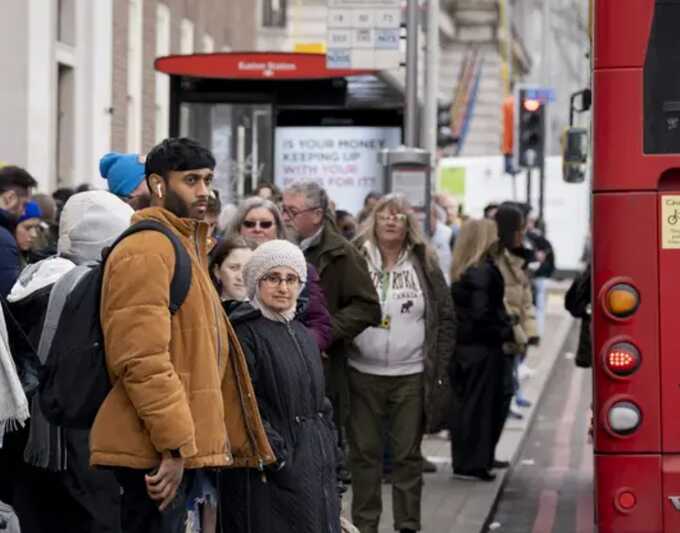
To add to the confusion, the TFL website crashed as users searched for travel solutions. Hundreds of thousands of commuters reportedly attempted to access the site simultaneously, overwhelming its servers.
Disruption began on Sunday as thousands of workers walked out over pay and working conditions, with no services operating before 8am or after 6pm.
The industrial action comes after the Rail, Maritime and Transport Union (RMT) rejected Transport for London’s 3.4 percent pay offer.
The strike is set to continue all week, with few or no services running on the Tube between Monday and Thursday.

The RMT strike disrupts all Tube lines, including Bakerloo, Central, Circle, District, Hammersmith & City, Jubilee, Metropolitan, Northern, Piccadilly, Victoria, and Waterloo & City.
Transport for London (TfL) reports little to no service across the network, urging commuters to complete journeys by 6pm.
The Docklands Light Railway (DLR) will also experience no service on Tuesday 9 and Thursday 11 September, and specific Elizabeth Line stations will have limited stops.
The Centre for Economics and Business Research suggests the economic cost of the industrial action could reach as much as £230m. This figure reportedly reflects the loss of roughly 700,000 working days across both TfL staff and the wider commuter base.

Strikes are planned on bus services operated by First Bus.
According to the TfL website, if they go ahead, they will affect 60 routes in west, northwest, and southwest London from 05:00 on Friday 12 September to 05:00 on Monday 15 September.
Little or no service is likely on affected routes. Local buses that are not directly affected by strikes are expected to be busier than usual.

World Affairs Correspondent
Read more similar news:
Comments:
comments powered by Disqus