Kyrgyz investigative journalists face trial over “mass unrest” charges
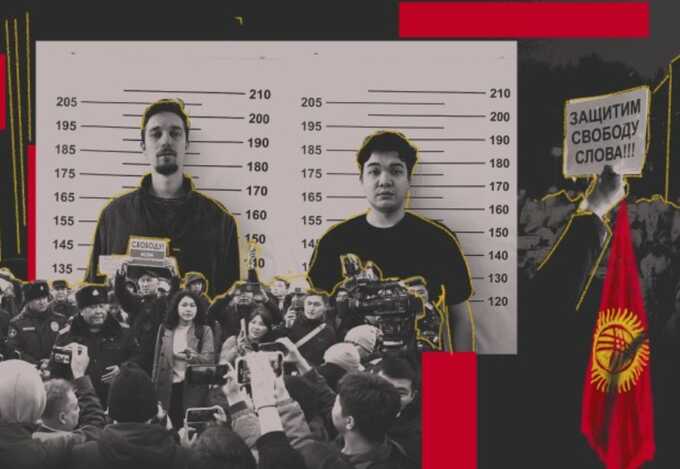
This week, four former employees from Kyrgyzstan’s leading investigative newsroom, Kloop, stood trial in Bishkek, accused of conspiring to “incite mass unrest.”
The defendants comprise an unusual mix: two accountants and two cameramen. All four have pleaded guilty, though their lawyer and Kloop management continue to insist the case was founded on a false premise.
During a court hearing on August 5, prosecutors revealed details of the indictment that few beyond the defendants and their lawyers had seen—an unusual move in Kyrgyz criminal procedure. Kaisyn Abakirov, a Kloop lawyer who reviewed the document, remarked that much of the case relied on five videos critical of the government, which prosecutors allege the cameramen helped produce.
However, those videos were never published by Kloop. Instead, they surfaced on Temirov Live, another investigative media outlet dismantled in a severe crackdown a year prior, and now operating from exile with limited capabilities.
The indictment also accuses Kloop’s accountants of transferring funds to the cameramen for what prosecutors described as joint investigations with exiled journalist Bolot Temirov. The videos, critical of officials, were portrayed as attempts to “call for active disobedience to the lawful demands of representatives of authority and for mass unrest.”
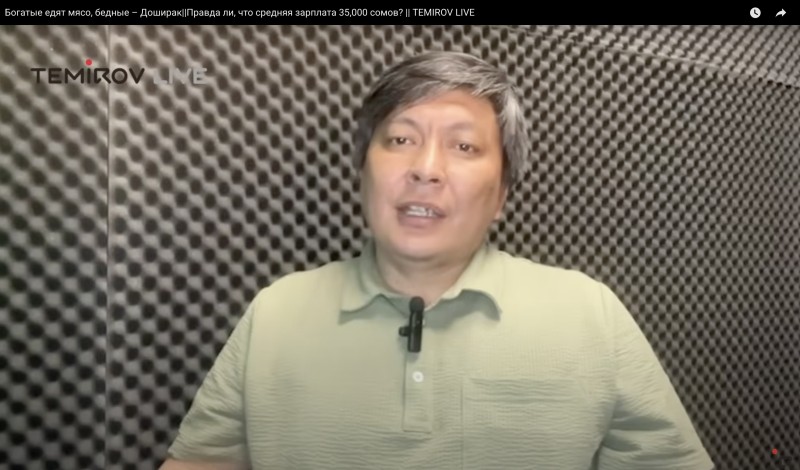
Kloop denies its staff ever collaborated with Temirov Live on the videos in question, and claims the trial is the latest phase in Kyrgyzstan’s extensive assault on independent media.
“The criminal prosecution is not linked to specific stories,” said Kloop co-founder Rinat Tukhvatshin. “In our case, there is not a single story in the indictment that was published on Kloop. [...] Kyrgyz authorities are merely finding ways to inflict maximum damage on the media, the organization, and the individuals associated with it."

Officials have barely concealed their intent. Earlier this year, a presidential spokesperson publicly accused Kloop of collaborating with Temirov to execute "special orders against the state" disguised as journalism.
Even Kloop’s leaders—who went into exile earlier this year—have been caught in the dragnet. Tukhvatshin has been indicted in a separate criminal case, though his lawyer states he was never shown the indictment. He, editor-in-chief Anna Kapushenko, and executive director Galina Gaparova all encountered their bank accounts frozen this summer.
Kyrgyzstan’s Vanishing Press Freedom
Once known as Central Asia’s “island of democracy,” Kyrgyzstan has experienced a notable regression into authoritarianism under the presidency of Sadyr Japarov, a politician who rose to power after a popular uprising that toppled the previous government in October 2020.
Since 2022, Kyrgyz authorities have arrested numerous journalists and moved to shut down outlets investigating corruption among high-level officials, including the president. Journalist Bolot Temirov was stripped of his citizenship and expelled from Kyrgyzstan, while outlets such as Kloop and April TV were dismantled by court order.
Kyrgyzstan’s campaign against independent media was mirrored in international rankings. In 2024, the country fell more than 50 places in Reporters Without Borders’ Press Freedom index, while Freedom House and other watchdog organizations also documented declines in press freedom.
When Journalism Becomes a Crime
Before Kloop, there was Temirov Live.
In January 2024, Kyrgyz security forces raided the newsroom in Bishkek, detaining 11 current and former journalists and staff, including the outlet’s director, Makhabat Tazhibek kyzy, who is also Temirov’s wife. All were charged with "inciting mass unrest."
The timing was conspicuous: The arrests occurred days after Temirov Live released a video accusing Interior Minister Ulan Niyazbekov of abuse of power.
While officials denied the case was related to the outlet’s reporting, court files reviewed by OCCRP suggest otherwise. Interrogation transcripts reveal officers questioned journalists about how stories were assembled and who within the government might be leaking information. They didn’t ask any questions about the alleged acts of incitement the journalists were accused of committing.
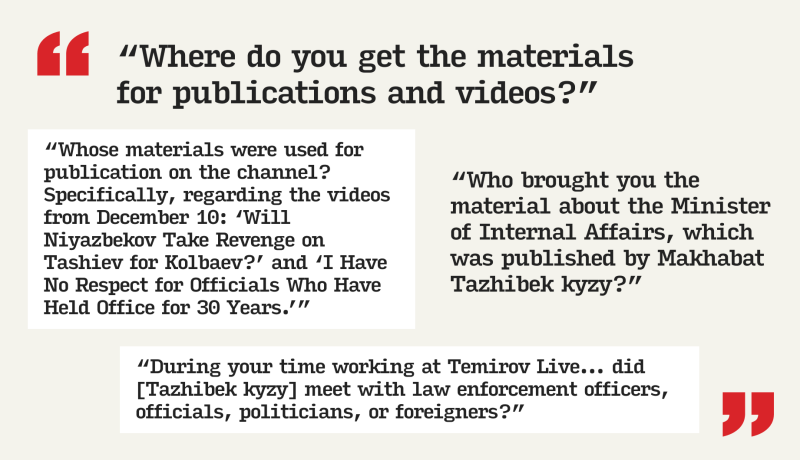
Routine newsroom activities like editorial meetings, video editing, and salary payments were reframed as evidence of conspiracy. Employees were labeled "associates and assistants," while the use of encrypted messengers like Signal was portrayed as evidence that journalists were "discussing negative topics aimed at inciting mass unrest.” In the prosecutor’s narrative, the newsroom itself became a crime scene.
The case leaned heavily on linguists enlisted by prosecutors to watch the videos and assess whether they genuinely incited unrest, using methods legal experts have deemed questionable. One analysis claimed Temirov Live videos contained "signs of calls for mass resistance, unrest, and eventual power change." Another concluded there was "no direct incitement," but the videos had a tone that could "influence public opinion in a destabilizing way.”
Investigators also created extensive "interaction graphs," mapping Temirov Live’s sources, colleagues, and relatives, presenting them as a network of subversion.
The trial concluded in late 2024. Seven staffers were acquitted. Two young reporters, after eight months in detention, were released on probation. However, two others received actual prison terms: Tazhibek kyzy was sentenced to six years, and Azamat Ishenbekov to five. This spring, Ishenbekov received a pardon from the president, a reminder that Kyrgyzstan’s press freedom now hinges on political whims.
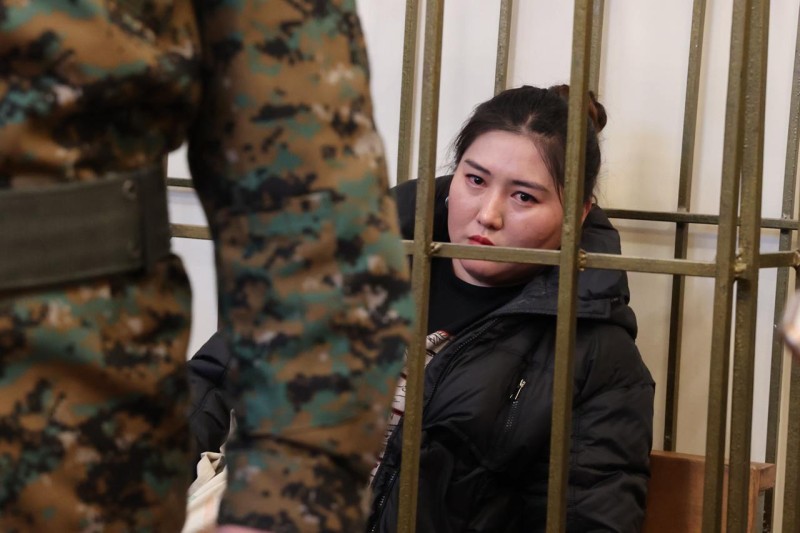
However, the crackdown didn’t stop there. The methods tested on Temirov Live were soon refined and redeployed against Kloop.
A Tested Strategy, Reused
On a quiet Wednesday morning in May this year, 25-year-old Kloop reporter Ziyagul Bolot kyzy heard fists hammering on her door in the southern city of Osh. Within minutes, plainclothes security officers from the State Committee for National Security (GKNB) were inside, seizing her phone and laptop. She was informed she would be taken to Bishkek for questioning, although no reason was provided.
She was not the only one. That same day, the GKNB conducted coordinated raids across the capital, detaining five more Kloop reporters and staff members. (Two more were arrested the following day.)
"People are being held incommunicado," stated Kloop co-founder Tukhvatshin in a public announcement that day. "They weren’t allowed to call family or lawyers. I don’t see this as a detention. I view it as an abduction."
Most were released within 24 hours, but soon appeared in a video produced by the GKNB, and circulated on social media and national television, pledging to sever ties with Kloop and apologizing for their “destructive” activities.
Two cameramen, however, remained incarcerated for months, while two Kloop accountants were prohibited from leaving Kyrgyzstan.
Authorities provided no specific charges at the time of the raids. Only later did it become evident that the case was linked to the five videos—none of which were published by Kloop.
At the time, the GKNB issued only a press release accusing Kloop’s staff of "inciting mass unrest." The statement mirrored the same vague language used in the case brought against Temirov Live.
Rights groups condemned the arrests as part of a larger trend.
“Anyone who says something critical against the authorities or their actions is now seen as calling for mass unrest," Syinat Sultanalieva, a Central Asia researcher at Human Rights Watch, told OCCRP. "This is a very dangerous trend in Kyrgyzstan because it resembles paths of development in neighboring countries."
For Kloop’s leadership, the message from the government has been unmistakable—but they state they will continue reporting, despite the pressure.
"We will continue our work,” said Tukhvatshin. “We won’t stop producing investigations. [...] Since no one can do this in Kyrgyzstan, we will be the ones to do it."
Two Kyrgyz journalists who cannot be named for security reasons also contributed to this story

Head of Investigations
Read more similar news:
Comments:
comments powered by Disqus