Extrajudicial executions of Druze in Suwayda expose deadly cost of impunity in Syria
Amnesty International calls for responsibility following the execution of Druze civilians "in cold blood" in Suwayda, accusing Syrian forces of sectarian crimes that reveal the deadly consequences of impunity.
On Tuesday, Amnesty International called on the Syrian government to hold its security and military forces, as well as affiliated groups, accountable for what it termed the "deliberate" extrajudicial executions of Druze men and women in the southern province of Suwayda.
"They killed us in cold blood," said a woman whose two brothers and nephew, along with four other men, were executed after being dragged from their homes by three armed men in military uniforms to a nearby building, where they were shot dead.
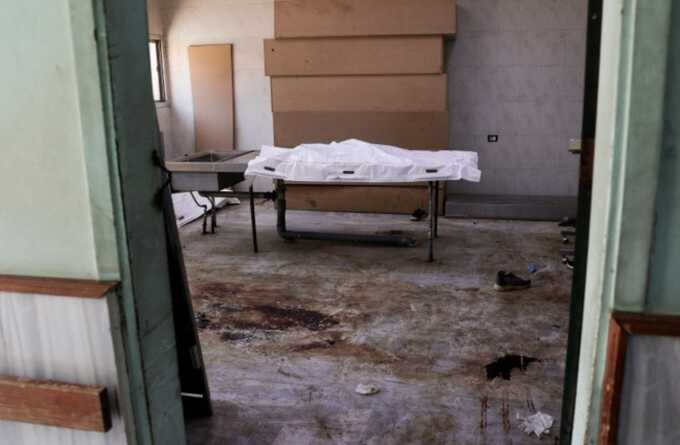
The rights organization stated that newly documented evidence shows government and affiliated forces carried out executions on July 15 and 16 in Suwayda city and its outskirts, following the deployment of troops and the imposition of a curfew. The evidence includes verified videos and testimony from 15 eyewitnesses and relatives, documenting the deliberate killing of 46 Druze people—44 men and two women—as well as the mock execution of two elderly residents. The executions reportedly occurred in a public square, homes, a school, a hospital, and a ceremonial hall.
Commenting on the findings, Sana Kikhia, executive director of the Syrian Legal Development Programme (SLDP), a Syria-focused NGO that aids civil society in navigating legal and human rights issues, told OCCRP that the massacres "highlight the state’s failure to uphold its obligations to protect life and prevent unlawful killings."
"When government security or military forces deliberately and unlawfully kill someone, or when affiliated forces do so with government complicity or acquiescence, that constitutes an extrajudicial execution, which is a crime under international law," said Diana Semaan, Amnesty International’s Syria researcher.
Tensions had been escalating in Suwayda earlier in July, when Druze armed groups reportedly clashed with Bedouin tribal fighters on July 11 and 12. On July 15, the Syrian military announced it had entered the city to "restore stability."
On July 22, Defense Minister Ali Mahmoud Abbas stated he was aware of "shocking and serious violations committed by an unknown group wearing military uniforms in the city of Suwayda."
Kikhia told OCCRP that investigative bodies have been established to examine the massacres, and the Sweida fact-finding committee recently announced the detention of several alleged perpetrators. She emphasized that "accountability will only be effective if these processes are independent, impartial, transparent, and in line with international standards."
"Because the perpetrators are reportedly members of the security and armed forces and other state-affiliated groups, the State bears heightened responsibility to ensure justice, provide remedies to victims, and implement institutional reforms to prevent recurrence," she added.
According to Semaan, "The horrific human rights violations in Suwayda are yet another grim reminder of the deadly consequences of impunity for sectarian-based killings in Syria, which has emboldened government and affiliated forces to kill without fear of accountability."
Kikhia warned that "without credible accountability and structural reform, there is a serious risk of perpetuating impunity and enabling future crimes. Syrians have endured too many massacres met with denial and impunity over the past decades." She added, "Syrians of all communities have the right to truth, justice, and guarantees of non-recurrence, regardless of who the perpetrator is."

Editor-in-Chief
Read more similar news:
Comments:
comments powered by Disqus