SpaceX finally nails Starship test after string of fiery failures
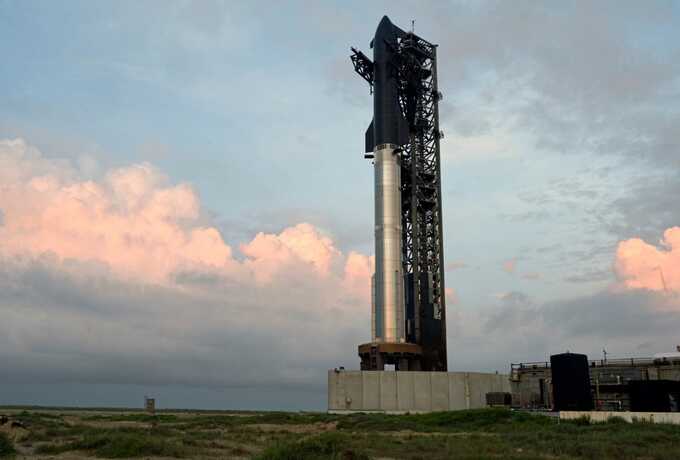
SpaceX has carried out a successful test launch of its Starship spacecraft, following a series of failed flights of the world’s largest and most powerful rocket.
Elon Musk’s company was also able to deploy a test payload of eight dummy satellites into space after Tuesday evening’s launch at Starbase, South Texas.
It was the tenth test for the world’s largest and most powerful rocket, which SpaceX and NASA hope to use to return astronauts to the moon.
NASA has ordered two Starships to land astronauts on the moon later this decade, and SpaceX CEO Elon Musk’s ultimate goal is Mars.
After just over an hour coasting through space, Starship splashed down as planned in the Indian Ocean.
Watch Starship’s tenth flight test → https://t.co/UIwbeGoo2B https://t.co/BFrpQPQFUw
— SpaceX (@SpaceX) August 26, 2025
No crew members were aboard the demo launch. The test also included the successful return of the craft’s Super Heavy Booster, which splashed down in the Atlantic after testing a landing-burn engine sequence. The Starship itself continued to orbit the Earth — moving from daylight in Texas through night and back into daytime again — before the planned splashdown.
Before the craft hit the waves, its engines fired, flipping its position so it entered the water upright with the nose cone pointed upward.
The successful demo followed a year of mishaps. Back-to-back tests in January and March ended just minutes after liftoff, sending wreckage into the ocean.
The most recent test in May – the ninth attempt – ended when the spacecraft tumbled out of control and broke apart as it approached its landing site in the Indian Ocean.
Super Heavy has splashed down in the Gulf pic.twitter.com/LGozUAmLt8
— SpaceX (@SpaceX) August 26, 2025
The craft has twice exploded over populated islands east of Florida, creating debris that struck roadways in Turks and Caicos and washed ashore on Bahamian islands.
In June, a Starship spacecraft that had been secured to an engine testing stand at the company’s launch and development facilities in South Texas abruptly exploded – spewing shrapnel and causing damage to SpaceX infrastructure.
These setbacks roused long-standing SpaceX critics and attracted new ones, including the Mexican government, which has threatened legal action against the company over reported debris on and around its shores. The string of mishaps also raised concerns among spaceflight experts and stakeholders who emphasized how much the United States has riding on Starship’s eventual success, including its plans to return humans to the moon as soon as 2027.
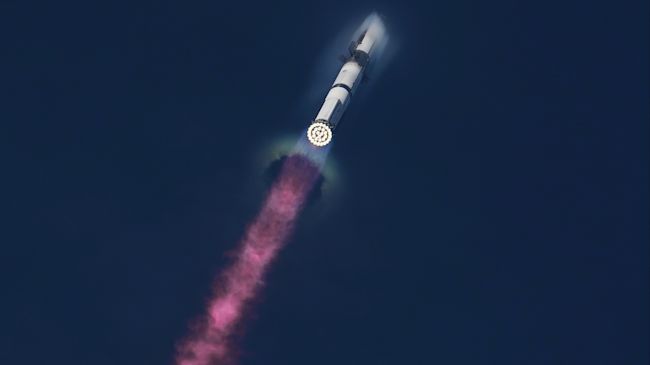
SpaceX later redesigned the Super Heavy booster with larger and stronger fins for greater stability, according to a company post on the social platform X this month. Other changes the company mentioned included adjustments to a component called a fuel diffuser, which SpaceX believes malfunctioned during the last flight, causing higher-than-expected pressure to build up in the Starship’s nose cone.
That is likely what caused the vehicle to spiral out of control, according to a technical overview SpaceX published last week. Despite the series of recent problems, the Federal Aviation Administration — which licenses commercial rocket launches — said last week it had closed its investigation into SpaceX’s latest mishap and approved the company’s plans to launch.

Editor-in-Chief
Read more similar news:
Comments:
comments powered by Disqus