10 July 2025 , 15:35
751
0
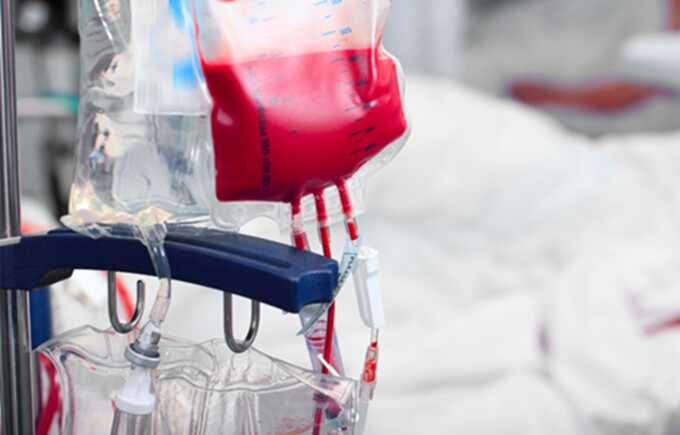
Scientists identify key breakthrough in artificial blood production
Researchers from Queen Mary University of London have made a major breakthrough in the development of artificial blood. The team has discovered that the signaling protein chemokine CXCL12 plays a critical role in the formation of red blood cells — the primary blood cells responsible for oxygen transport. This finding was reported by News-Medical.
The scientists found that CXCL12 is essential in the maturation of red blood cells by assisting precursor cells in discarding their nuclei — a vital step in their transformation into fully functional erythrocytes. Red blood cells make up about 45% of human blood volume and perform the crucial function of delivering oxygen to all tissues in the body.
Naturally, this complex process occurs in the bone marrow, where stem cells sequentially develop into erythroblasts and then, after losing their nuclei, become mature red blood cells. The loss of the nucleus is not merely a formality; it is a necessary step that allows the cell to condense and increase hemoglobin concentration, thereby improving oxygen-carrying efficiency.
The research team demonstrated that adding CXCL12 in lab conditions enables this critical stage of red blood cell development to be successfully replicated, opening new doors for improving artificial blood production technologies.
Currently, artificial red blood cells are primarily derived from cord blood or bone marrow stem cells — sources with limited availability. While modern technologies allow ordinary cells to be reprogrammed into stem cells, the efficiency of nuclear removal has remained below 40%. The use of CXCL12 could significantly boost this rate, making the production of artificial blood more effective and economically viable.
This discovery is particularly valuable for producing rare blood types and developing personalized treatments for severe conditions like sickle cell anemia and thalassemia. Furthermore, large-scale artificial blood production could help solve the global shortage of donor blood — especially in emergencies and regions with limited access to medical care.

Editor-in-Chief