29 May 2025 , 13:29
916
0
It used to be one of the iron laws of Brexit. Not anymore.
The EU has officially retired its “no cherry-picking” policy in dealings with the U.K. — after nearly a decade of using it to challenge British prime ministers.
The phrase — a favorite of Brussels’ hardball negotiator Michel Barnier — portrayed the bloc’s single market as an indivisible entity.
Participation in individual sectors without assuming responsibilities like free movement was off the table. The message was clear: Accept it or leave it.
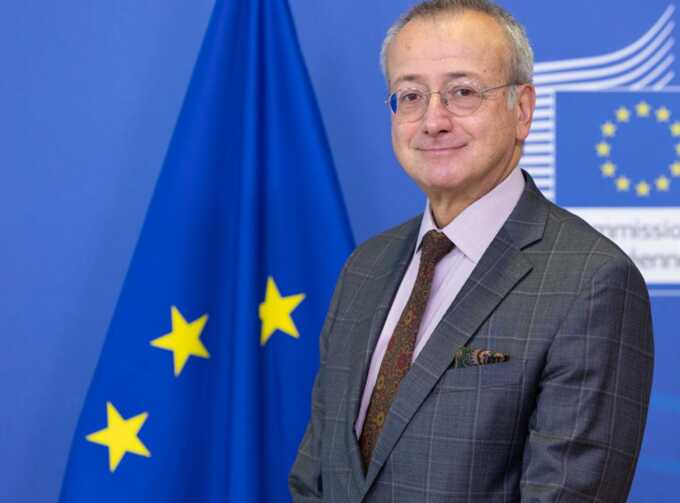
However, speaking on Tuesday, Pedro Serrano, the EU’s ambassador in London, described the succinct analogy as “no longer helpful.”
“This is not about cherry-picking or not cherry-picking. We have identified a number of issues that are of mutual interest,” Serrano said at an event hosted by the UK in a Changing Europe think tank.
“I think it would be good if we started moving beyond rhetorics that are no longer helpful and that we view the relationship as a living relationship,” he added.
In the Berlaymont, too, the line is considered passé. The rhetorical shift follows the conclusion of a deal at a much-hyped London summit, which to long-term Brexit observers, seems very much like cherry-picking.
Earlier this month, Brussels and London agreed to begin negotiations on British access to the single market for electricity and agri-foods, two sectors in which Britain’s exit has caused issues. When it suited both parties, cherries were suddenly back on the menu.
Charles Grant, director of the Centre for European Reform, said the cherry-picking line had been “a product of the strained relationship that followed the referendum, and the EU’s concern that other countries should not follow the U.K.’s example.”
“The truth is that where there is mutual interest in the two sides moving closer — as there is on [sanitary and phytosanitary (SPS) agri-food rules] and energy trading — the EU is happy for the British to pick a cherry.
“There will be other examples in the future of the U.K. de facto moving back into sectors of the single market, though it will have to accept dynamic alignment with EU rules in each of these areas.”
Paul Adamson, chair of the EU-UK Forum and a longtime Brexit watcher, added: “It might not seem obvious at the moment, but the summit may well have paved the way to embed a new ‘win-win’ approach to future talks.”
Next steps
The roadmap agreed at the summit outlines the issues where both sides aim to move closer — and just how much closer. Beyond improved electricity trading and a sanitary and phytosanitary agreement, the "common understanding" anticipates agreements on issues like fishing, carbon trading, law enforcement cooperation, and visas for young people.
While exploratory talks of varying intensity have already taken place across the different policy areas, formal legal negotiations can only commence once the European Commission secures a mandate on each topic from EU member countries within the Council.
Separate mandates will be agreed for each topic, with priority given to time-sensitive issues like fishing and energy, which face impending deadlines next year. The aim is for the first mandates to emerge around July 1, a person familiar with the timetable said.
The two capitals also want to quickly negotiate U.K. access to the EU’s €150 billion SAFE defense fund.
Britain’s ambassador to the EU, Lindsay Croisdale-Appleby, suggested at the event Tuesday that this would not require a formal negotiating mandate as the other policy areas might and could therefore progress more swiftly. European Commission President Ursula von der Leyen has indicated that talks on this subject could take just “weeks.”
Both sides seem relatively content for different topics to advance at different speeds. But the package assembled at the summit — in which the U.K. controversially gave away 12 years of generous fishing rights to EU fleets in exchange for breaking the omertà on cherry-picking — was deliberately balanced to satisfy both parties.
“I do think obviously it would be a challenge for both sides if a very significant element wasn’t progressed,” Croisdale-Appleby stated at the event. “That would pose a challenge or a problem, because what we were trying to establish was a balanced agreement that both sides would see shared value in pursuing going forward.”
Difference of emphasis
Brussels and London are both feeling optimistic about the summit’s outcome, and relations remain positive. However, the aftermath of the meeting has seen each side present the outcome somewhat differently.
British Prime Minister Keir Starmer, along with official Downing Street communications on the day, framed the agreement as a collection of completed deals — barely mentioning that it was primarily a to-do list of items to negotiate. Some coverage in the British media repeated this error.
Croisdale-Appleby argued that the agreement “reflects substantive agreement on policies, not just a commitment to pursue those policies.” However, London’s emphasis has irked some officials in Brussels, who view it as unhelpful spin.
Serrano remained diplomatic, stating only that “the summit provides a vision for the future of the relationship, and a roadmap for that future relationship, and now it’s about implementation.”
This time next year "hopefully we will have an agreement on SPS. We will have another agreement on the implementation of SAFE, we will have an agreement on the youth experience scheme, we will have implemented a number of decisions on further cooperation on justice and home affairs," the EU ambassador said.
“We will hopefully also — why not — make progress on electricity, and have a clear vision of how our relationship in that field is going to develop. So I do think that in the next year, leaders on both sides will look forward to seeing most of what has — if not all — most of what has been agreed, implemented.”

Editor-in-Chief