02 April 2025 , 11:01
1035
0
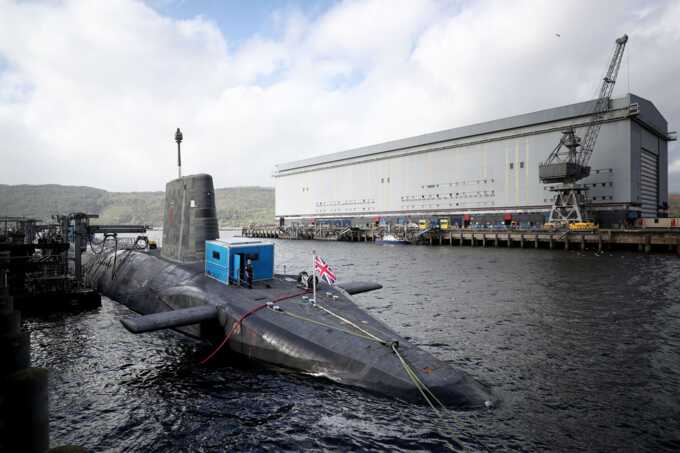
The SNP has long objected to Britain’s nuclear deterrent being based in Scotland. Geopolitics — and domestic politics — are changing the calculus.
Scottish nationalists have long defined themselves by their opposition to nuclear weapons, reported by Politico.
Alongside promoting Scottish independence, the Scottish National Party (SNP) has spent decades advocating the unilateral removal of Britain’s nuclear deterrent — the Trident missile system — from its base at Faslane, near Glasgow, “at pace.”
Spooked by war and global uncertainty, some in the party now want to change that.
“When the facts change, careful consideration of our response is appropriate,” Ian Blackford, a former SNP leader in Westminster known for his loyalty to the cause, wrote in a Times op-ed in early March that sparked wide debate within the party. “There must now be a concentration of minds on a multilateral approach to achieve nuclear de-escalation.”
While Blackford emphasized that he still supports the eventual removal of the nuclear deterrent, his shift from uni- to multilateralism is a sharp departure from the SNP’s historic position. It also reflects the party’s evolving view on defense over the last few decades, which has seen a shift, from its initial opposition to NATO itself to its more recent embrace of the U.K.’s arming of Ukraine and the hike in defense spending. The SNP only voted to support NATO membership for an independent Scotland in 2012, an issue that divided the party at the time.
Defense policy is reserved to the Westminster U.K. government, with the SNP — which leads the devolved Scottish government — not holding responsibility for it under the current structures of the U.K. But the party has long taken positions on defense and foreign affairs as a signal of what an independent Scotland could look like.
If the party did change its policy, it would be effectively to favor the removal of the weapons, which belong to the U.K. as Britain’s nuclear deterrent, only under agreements obliging other nuclear-armed states to do the same — which is still a far cry from the party’s persistent campaigning on Trident’s immediate removal.
The SNP’s current leader John Swinney publicly rejected Blackford’s argument and reiterated the party’s longtime position. But there is a feeling within the party that given the difficulties posed by calling for the unilateral removal of nuclear weapons at a time of war, the view of the leadership may soon evolve.
“[The change in position] is going to be forced upon them anyway,” a senior SNP figure, granted anonymity like others in this article to talk freely about the party’s internal dynamics, told POLITICO. “The SNP is in a very different position [on defense] from where it was a few years back — and the current stated position is open to challenge.”
Life in the Faslane
That characterization is fiercely disputed by other figures in the party. And it’s little wonder, given that the party and the wider independence movement leaned heavily on the issue — using the slogan “bairns, not bombs” — throughout its unsuccessful 2014 independence referendum and in its landslide election wins that followed.
“When Scotland is independent and seeking to rejoin the EU, I think you’d want to see the U.K.’s nuclear deterrent removed as quickly and as safely as possible,” SNP MP Stephen Gethins said. He said it would be “inappropriate” to take a multilateral stance on Trident’s removal.
Others go further, with one SNP official insisting “there isn’t any chance of the policy changing.”
Alyn Smith, a former SNP MP, effectively agreed: “The party is not changing its stance in any sense.”
“We will be getting the nuclear weapons off our soil and out of our waters,” Smith said — though he did admit there is a “discussion to be had about what timescale” that takes.
But there is an acknowledgement that the debate shows the changing landscape within the SNP when it comes to defense issues.
“We’ve had disgraceful positions on defense in the past,” said a second SNP official, referring in particular to future SNP leader and first minister Alex Salmond’s opposition to the NATO bombing of Serbia in 1999.
“This would have been a scandal and sparked a civil war five years ago. But there’s far more maturity in the SNP on defense now … we won’t be using [’bairns, not bombs’] on leaflets now,” they added.
Even the public, and private, pushback to Blackford was fairly limited beyond Swinney’s politely stated disagreement. One person in the SNP supportive of efforts to push for a multilateral approach said the response from the party was “modestly encouraging.”
This has emboldened those supportive of Blackford’s stance to consider trying to formally change the party’s policy at its conference this fall, with the second SNP official quoted above predicting there will likely be a vote on adopting the multilateral approach. That could bring the splits on the issue into the open.
Even beyond geopolitics, some feel the party should shift course for purely political reasons.

The SNP’s current leader John Swinney publicly rejected Blackford’s argument and reiterated the party’s longtime position. | Jeff J Mitchell/Getty Images
A Survation poll carried out last week revealed that only 22 percent of Scots agree with the current SNP position on scrapping the nuclear deterrent — compared to 56 percent who believe the weapons should be retained.
Goal, open?
It’s little surprise that Scottish Labour, the SNP’s main rivals, will happily mention the nationalists’ defense policy on repeat ahead of next May’s elections to the Scottish parliament — particularly given its current travails after holding high hopes of ousting the long-serving SNP.
After winning 37 of Scotland’s 57 constituencies at last July’s general election, Scottish Labour’s polling has since fallen off a cliff amid the Westminster Labour government’s unpopularity. Its leader Anas Sarwar’s fortunes went from walking on water to Bute House — the first minister’s residence — to barely treading water.
Yet the party believes hammering the SNP’s current unilateralist approach to nuclear weapons as weak during a time of geopolitical uncertainty will resonate with voters.
“What the SNP’s position does is exposes them as being fundamentally unserious,” said Labour MP Blair McDougall, who sits on the House of Commons’ Foreign Affairs Committee. “They have adopted a position which is about their own historic ideological positions, rather than a recognition of the world that we’re now living in.”
“They’re in a complete mess on this. It just isn’t a credible position,” said another Labour MP. “We all want multilateral disarmament, but to just get rid of them at this time would make us less safe, and the majority of voters see that.”
That’s a message both Sarwar and Prime Minister Keir Starmer have echoed repeatedly.
At First Minister’s Questions last month, the Scottish Labour leader said it was “not the time for rigid ideologies” and that the SNP’s approach would make Scotland “less safe and less secure.”
Mirroring Sarwar, Starmer also criticized the SNP’s current nuclear policy.
“If ever there was a time to reaffirm support for a nuclear deterrent, it is now,” the PM declared, calling its decision “completely wrong-headed.”
Though Scottish Labour has faced its own internal dissent about its stance on Trident, voting to back its abolition in 2015, the party’s centrist leadership now sees a nuclear deterrent as essential — and hopes a focus on defense and geopolitics may help it copy the slight uptick in support for Starmer that followed his meeting with Donald Trump in the White House in February and his efforts on Ukraine.
“Starmer is good at doing bad news. His problem is he can’t do good news,” political scientist John Curtice said. “He’s very good at saying doom is around the corner.”
Scottish Labour will hope to emphasize the doom as it gears up to finally oust the SNP from power.
Andrew McDonald reported from Glasgow and London. Noah Keate reported from London.

Deputy Editor