21 February 2024 , 07:39
599
0
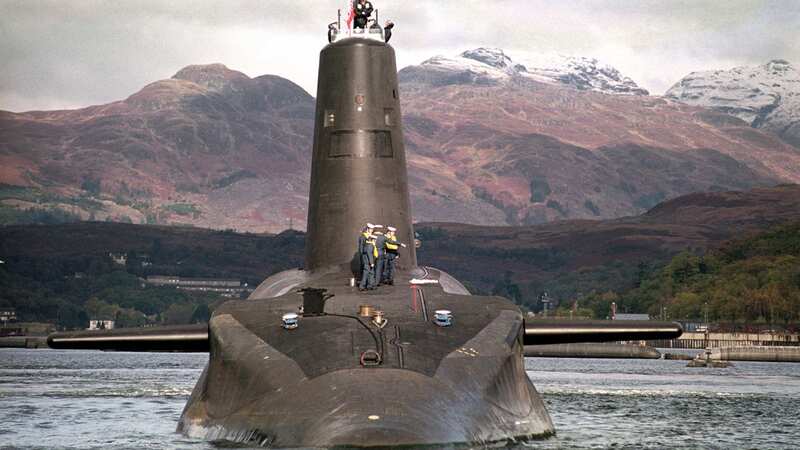
A British nuclear missile misfired and crashed into the ocean near the submarine that launched it during a test last month, it has been revealed.
Labour has called for assurances over the effectiveness of Britain's nuclear deterrent after "concerning" reports about the failed missile launch. The Ministry of Defence (MoD) has confirmed an "anomaly occurred" during an exercise that took place on January 30 on board the nuclear-powered submarine HMS Vanguard. Officials said they could not say any more because the incident relates to national security.
But they said there remained "absolute confidence" in Britain's constant at-sea nuclear deterrent and that it continues to be "secure and effective". The Sun, which first reported the test failure, said the incident occurred during an exercise off the coast of Florida, United States, last month. The newspaper reported that a dummy Trident 2 missile was propelled into the air by compressed gas in its launch tube, but that its so-called first-stage boosters did not ignite.
An anonymous source quoted by The Sun said: "It left the submarine but it just went plop, right next to them." The MoD said the "anomaly" during the exercise was "event specific". It is said to be the second misfiring in a row, with a test launch of a Trident missile by the Royal Navy off the coast of the US in June 2016 also reported to have been a failure.
Shadow defence secretary John Healey said: "Reports of a Trident test failure are concerning. The Defence Secretary will want to reassure Parliament that this test has no impact on the effectiveness of the UK's deterrent operations." A written ministerial statement on Britain's nuclear deterrent is expected to be laid in the House of Commons by Defence Secretary Grant Shapps, according to Wednesday's order paper. Mr Shapps was on board the 150-metre vessel at the time of the incident, a spokesman for the Defence Secretary confirmed.
 Red Arrow pilot forced to send out emergency alert after bird smashes into jet
 Vanguard-class submarine HMS Vigilant, one of the UK's four nuclear warhead-carrying submarines (AFP via Getty Images)
First Sea Lord Admiral Sir Ben Key was also present at the time to mark what was the final exercise for Vanguard and its crew after undergoing a refit that took more than seven years, an MoD spokesman said. The incident comes at a time of high global tension, with a war raging in the Middle East and Russia's invasion of Ukraine approaching its second anniversary.
A spokeswoman for the MoD said: "HMS Vanguard and her crew have been proven fully capable of operating the UK's continuous at-sea deterrent, passing all tests during a recent demonstration and shakedown operation (DASO) - a routine test to confirm that the submarine can return to service following deep maintenance work. The test has reaffirmed the effectiveness of the UK's nuclear deterrent, in which we have absolute confidence. During the test, an anomaly occurred.
"As a matter of national security, we cannot provide further information on this, however, we are confident that the anomaly was event specific, and therefore there are no implications for the reliability of the wider Trident missile systems and stockpile. The UK's nuclear deterrent remains safe, secure and effective."
HMS Vanguard is one of four of the so-called Vanguard-class nuclear submarines that first went on patrol in 1994, with one of the vessels continually at sea. They carry the American-built Trident 2 D5 nuclear missiles, the mainstay of Britain's strategic nuclear deterrent. A Trident missile can be fired at targets up to 4,000 miles away and at its fastest can travel at more than 13,000 miles an hour, according to the Royal Navy.
They are 13 metres long, weigh 130,000lb (58,500kg) and are ejected from the submarine by high-pressured gas before they fire as they reach the surface of the water. Each Vanguard-class submarine can hold up to 16 intercontinental ballistic missiles, but will only carry up to eight Trident rockets and up to 40 nuclear warheads. The V-class is due to be replaced by the bigger Dreadnought-class submarines in the 2030s.
Between £31 billion and £41 billion have been set aside for the wider programme of replacing the Vanguard-class submarines, according to figures from the House of Commons Library.