17 February 2024 , 07:31
1001
0
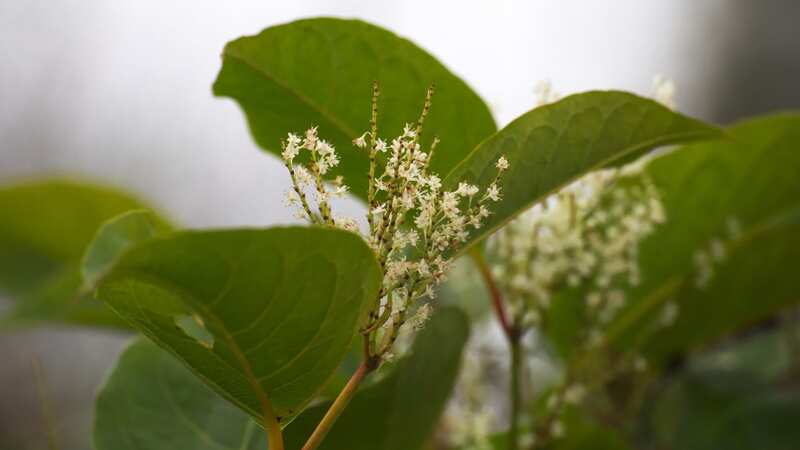
Garden experts revealed the five key signs of Japanese knotweed to look for - and how to tell the difference from normal plants.
Japanese knotweed can be a complete nightmare, and could even affect mortgage applications. It's incredibly expensive to remove, and can even grow through walls. But experts at Environet said one in four people wrongly mistake it for another plant, and there are five key signs to look out for.
A free plant ID service is available for those who think knotweed might be growing in their garden, but they are often false alarms. Only one in six reported they had the invasive plant, but in most cases, it was actually native bindweed.
Emily Grant, director of operations at Environet said it was a common mistake, as knotweed and bindweed both grow quickly and have similar shaped leaves. She added: "Because bindweed is really aggressive and tends to get out of hand people tend to panic and think the worst."
 Japanese knotweed grows fast and pushes other species away (BELGA MAG/AFP via Getty Images)
There are key differences that can be spotted between different species. The less fearful one has heart-shaped leaves, but knotweed's leaves are flat.
 Gardening expert shares exact date when you should cut grass after winter
Leaves on knotweed are bright green and shaped like a shovel, but they also have a distinctive zig-zag pattern along the stem.
This leaf pattern, experts say, is a good indication that the plant is knotweed.
 Leaves on knotweed are bright green and shaped like a shovel they also have a distinctive zig-zag pattern along the stem (Getty Images)
Shoots that begin to sprout in spring are very distinctive, and their bright-red colour is often compared to asparagus. Experts say now is the time to spot the red shoots, and Environet was now on 'high alert' for them appearing.
Emily added: "It can grow up to 10cm in height per day, so you can literally see it growing from one day to the next, whereas our native plants are hardly growing by comparison."
During the summer months, knotweed grows bunches of small, creamy white flowers. Some related species, meanwhile, grow pink flowers, including Japanese knotweed or the Himalayan knotweed. They are not as aggressive and not very common in the UK. Bindweed flowers, meanwhile, are larger, white in colour, and trumpet-shaped. They tend to grow alone rather than in clusters.
Flowers from knotweed arrive in late summer and early autumn. It unfortunately shows the plant is well-established, and could be be extremely difficult to remove.
 The invasive species growing through metal railings in front of a wall (Getty Images/iStockphoto)
The majority of a knotweed plant is below the ground; similar to an iceberg, in that respect. Ms Grant added: "What you see at the top is nothing compared to what is going on under the ground."
It has a network of creeping 'rhizomes' - or underground stems - that can grow new shoots, store nutrients, and allows it to spread so fast. But its distinctive orange roots make it easy to identify.
Knotweed snaps in pieces, and a full plant can emerge from a fingernail-sized piece. When the soil is disturbed, it can spread further and create many new plants.