25 January 2024 , 08:15
1303
0
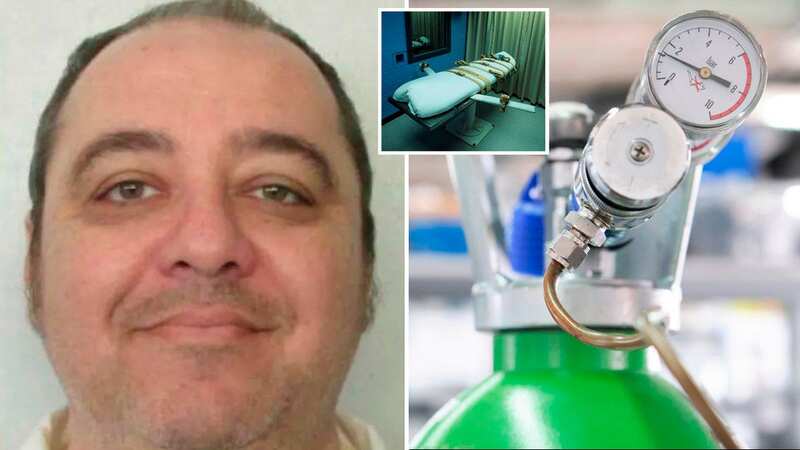
A death row inmate set to be killed by a controversial nitrogen gas is a "guinea pig" undergoing "human experimentation", according to human rights campaigners, who have slammed the unproven method.
Kenneth Smith, 58, is due to be the first-ever prisoner to be killed by nitrogen hypoxia which will see him suffocate and cause him to fall unconscious quickly and die from a lack of oxygen.
He will be strapped to a gurney and be forced to breathe nitrogen through a mask until his body is depleted of oxygen and his organs shut down. A doctor testified on behalf of Smith that the low-oxygen environment could cause nausea, leaving Smith to choke to death on his own vomit.
Research has shown that when oxygen levels in the air drop to around 12.5 percent, humans can experience "impaired respiration that may cause permanent heart damage" along with nausea, vomiting, and "very poor judgment and coordination."
READ MORE: Alabama nitrogen gas execution scheduled as Kenneth Smith faces death today
 Labour MP apologises for branding Israeli government 'fascist' in Parliament
 Smith will be facing the death penalty today (Alabama Department of Corrections)
 Elizabeth Sennett, 45, was found dead on March 18, 1988, in the couple's home in Alabama's Colbert County (Find a Grave)
For all the latest news, politics, sports, and showbiz from the USA, go to
Smith had previously survived a botched attempt at a lethal injection execution in November 2022 where he spent hours believing he was going to die but ultimately survived.
And now human rights campaigners have criticised Alabama for using the controversial method of nitrogen hypoxia as it remains untested.
Maya Foa, a joint executive director of Reprieve, the human rights group, said that Alabama was doubling down on its untested human experimentation.
“Alabama has tortured Kenneth Smith once already, strapping him down and stabbing him with needles for more than an hour in a failed attempt to kill him. It is astonishingly reckless and cruel to try again using an untested execution method that has every chance of causing terrible suffering,” Foa said.
Foa added that Alabama's published protocol for the controversial death was "alarmingly vague - officials evidently don’t know what they are doing and are hoping for the best. The state is treating a human being like a guinea pig in a laboratory and calling it justice.”
The United Nations has also slammed the method and expressed their "alarm" at the prospect of the execution. They believe there is a possibility of "grave suffering which execution by pure nitrogen inhalation may cause" and noted that there was no scientific evidence to prove otherwise.
 Kenneth Smith is due to be the first-ever prisoner to be killed by nitrogen hypoxia (Sygma via Getty Images)
Smith's own lawyers have claimed the state is looking to make him the "test subject" for a new execution method.
The inmate expressed his fears in writing, saying: "I am worried that we have told Alabama that these risks could happen - will happen - just like we warned them last year. And they will do nothing to prevent these dangers from happening."
Smith's spiritual advisor, Reverend Jeff Hood, expressed his worries about Smith's potential suffering and resistance to the execution. He stated: "This is not going to be a peaceful experiment." Adding: "I think it's important for people to realise, when you strap someone down like that, you can't expect someone who's choking to death - suffocating to death - to not resist."
 Abandoned prison which caged dangerous cartel killers found by urban explorer
At present, Alabama is just one of three states, along with Oklahoma and Mississippi, that authorises the use of nitrogen gas in executions.
The state will fit a 'NIOSH-approved Type-C full facepiece supplied air respirator', a type of mask usually used by industrial workers, over Smith's face during the execution. After this, a warden will read out the death warrant and ask Smith for any final words before triggering the "nitrogen hypoxia system" from another room.
According to Alabama's guidelines for execution by nitrogen hypoxia: "After the nitrogen gas is introduced, it will be administered for (1) fifteen minutes or (2) five minutes following a flatline indication on the EKG, whichever is longer." However, parts of the protocol for this new execution method have been redacted from public view.