People baffled as they try to work answer to seemingly-simple clock riddle
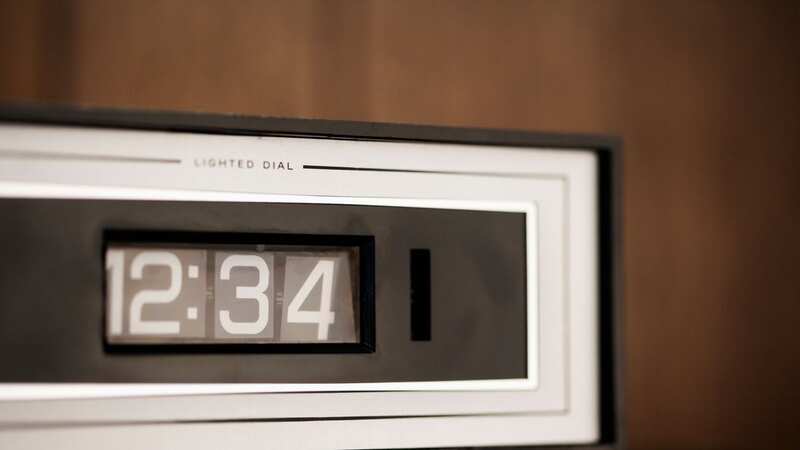
A baffling brain teaser has people arguing over the correct answer, as they struggle to work out how many times a day digits on a clock appear in increasing order.
Brain teasers are a great way to train your brain, but they can also make you want to tear your hair out when they get overly complicated. This new puzzle has been leaving people very confused, as they can't seem to agree on the correct answer - do you think you can solve it?
The puzzle was shared on X - formerly known as Twitter - and asks people to work out how many times a day a 24-hour digital clock would display four digits in sequential order. It seems simple enough to work out, but people have been unable to come to agreement on what the answer should be.
The post, shared by @quiz_riddles, reads: "You have a digital clock that displays time in a 24-hour format (00:00 to 23:59). How many times in a day do all the digits on the clock appear in strictly increasing order?"
Can you work out what the answer should be? It can seem complicated at first as the question is quite wordy, but once you've figured out what the question is actually asking of you, it's not that hard to find the answer. However, it seems people online are struggling to agree on a correct solution.
 Nearly half of Brits think it's okay to eat food in bed, like toast and biscuits
Some seem to believe the clock will show sequential numbers in increasing order seven times, as they counted "2:34", "3:45", and "4:56" among their answers. Others believe the correct answer is one, as the only acceptable time to them is "12:34". And one person even argued the answer was 87, as they said that "strictly increasing" just means that each digit must be larger than the one before it, but not necessarily by one. Under this theory, times such as 01:49 would count, as each digit is higher than the one before.
Answer
If so many people are coming up with different solutions, what's the correct one? Helpfully, the X user who posted the riddle has not shared what the real answer is. However, the answer that most people seem to agree on - and the one we believe is correct - is three.
The question asks for numbers that are in "strictly increasing order", and uses 01:23 as an example time. This means that in addition to 01:23, the only other times of day when this is true are 12:34 and 23:45, making the correct answer three.
Did you manage to solve it? Let us know in the comments!
Read more similar news:
Comments:
comments powered by Disqus