Tricky maths question which 'divides internet every time' leaves people baffled

A mind-boggling maths question that always "divides the internet" has resurfaced online once again, and people are already arguing over the correct answer.
Brain teasers are a great way to exercise your mind, but if you can't work out the answer to a complex puzzle then it can be frustrating. Maths questions are often ones that leave people with a headache, as you can arrive at a completely different answer to someone else if you don't follow the correct order of operations.
And one particularly confusing puzzle has been going viral after it was shared on X, formerly known as Twitter, as people can't seem to agree on the right answer. Some believe it should be 36, while others say it's 4 - so which side are you on?
 The question has been leaving people stumped (quiz_riddles/Twitter)
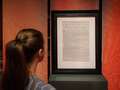
The puzzle was shared on X by the user @quiz_riddles, who said: "This tricky one divides the internet every time. Thoughts?". The user then shared a picture of the maths question, which read: 60 ÷ 5(7 - 4) = ?
In order to solve the question, you first need to understand the order of operations. Depending on what you were taught at school, this could take the form of an acronym such as BODMAS, BIDMAS, or PEMDAS. This rule is the standard procedure for which all sums must be worked out and tells you which parts you need to solve first in order to get the correct answer.
 Viral sausage roll debate leaves Brits confused about how to order at Greggs
All three acronyms lay out the same rule, they simply use different words to describe some of the operations. The first letter stands for brackets or parenthesis, while the second stands for orders, indices, or exponents - basically meaning things like powers or roots if they happen to be present in the sum. The M and D stand for multiplication and division, while the A and S are addition and subtraction.
No matter what answer you get, BODMAS says you must do brackets first, so we can all agree that the sum can be simplified somewhat to 60 ÷ 5(3) = ?. But the confusion over the answer comes with what happens next.
If you know about formulas in maths, then you'll know that 5(3) means the same thing as 5 x 3. In the order of operations, division and multiplication are treated as being on the same level, meaning that if they're both present in a sum, you should work them out from left to right. This means that if we treat the sum as 60 ÷ 5 x 3, then we should get 36 as our answer, as we should do 60 ÷ 5 first, which is 12, and then 12 x 3.
However, the reason people are getting 4 as the answer is because they have treated the 5 in the sum as being connected to the bracket. Once you've worked out the sum as far as 60 ÷ 5(3), it could be argued that the bracket portion is still not solved, as we haven't fully gotten rid of the brackets. Therefore, we have to solve the 5(3) portion before we can move past step one of BODMAS. In this method, the sum you're solving is 60 ÷ 15, which is 4.
Even the account that posted the question has not given the answer as of the time of writing but in a poll posted by the account that asked people what they thought the answer was, 4 won by just 4.5% of the votes.
One person explained in the comments: "The number 5 is ambiguous. Both answers are correct unless you define the placement of the number 5. Unless you put parentheses around the 60/5 then the 5 can be interpreted has either being multiplied or divided."
What do you think the answer is? Let us know in the comments!
Read more similar news:
Comments:
comments powered by Disqus