'Once-in-a-lifetime' event will see bright star briefly disappear next week
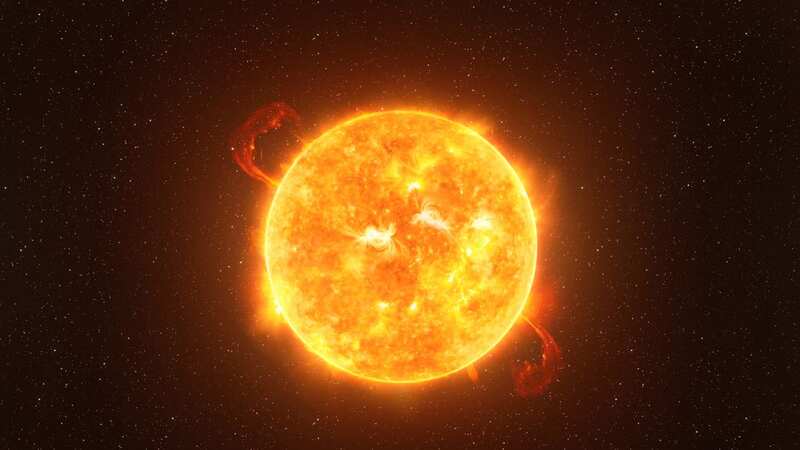
One of the largest stars visible to the naked eye is expected to briefly vanish from sight next week in a "once-in-a-lifetime" event, astronomers say.
Roughly 764 times as large as the Sun, Betelgeuse (Alpha Orionis) is set to grow fainter and almost disappear for between 7 and 12 seconds on Monday as asteroid Leona passes in front of it, an event known as an occultation. Sky watchers in southern Europe, southern Florida in the U.S. and Mexico will see Betelgeuse temporarily dim as the asteroid blocks most of the star's brightest light. This won't be the case from the UK but you can still witness the event via a live streaming by the Virtual Telescope Project from 1am on Tuesday morning.
 Betelgeuse, a red supergiant, will momentarily vanish as an asteroid passes in front of it on Monday (AP)
While occlusions are not uncommon phenomena, astronomers are eager to use this chance to study the surface of Betelgeuse. Miguel Montargès, an astrophysicist at the Paris Observatory, called the event a "once-in-a-lifetime opportunity" that will enable scientists to analyse the star's outer region, normally overwhelmed by its bright core.
"This kind of occultation is very useful to constrain the shape of the asteroid involved. Here, we hope to even investigate the surface of the involved star, too: Betelgeuse. It is a large red supergiant and while Leona will move in front of it as seen from Earth, we will be hopefully able to learn more about its large convective cells, driving its variable brightness," commented Gianluca Masi, director of the Virtual Telescope Project.
At 642 light-years from Earth, Betelgeuse is relatively close in astronomical terms and has long been a subject of interest for its fluctuations in brightness. Astronomers predict that within the next million years the star will exhaust its nuclear fuel and undergo a supernova explosion so bright it will be visible from Earth even during the day.
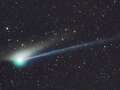 Green comet last seen by Neanderthals 50,000 years ago to fly past earth tonight
 The unexpected "Great Dimming" of Betelgeuse in 2019 was most likely caused by the ejection of hot material that formed a starlight-blocking dust cloud (Hubble/AFP via Getty Images)
Masi added: "In 2019-2020 Betelgeuse dimmed significantly, later recovering its brightness; furthermore, it is one of the best candidates for a future supernova event, so the importance of the upcoming occultation is undoubtedly extremely high".
With its unmistakable orange-red hue and distinctive (though varying) brightness, Betelgeuse is particularly easy to spot, often as the tenth-brightest star in the sky. According to NASA, Betelgeuse is roughly 10 million years old and therefore much younger than our nearly 5-billion-year-old Sun – but due to its larger size will burn through its materials faster and have a shorter lifespan.
 Betelgeuse is in the constellation Orion, named after the hunter in Greek mythology (Getty Images/Stocktrek Images)
Astronomer and mathematician Sir John Herschel was the first to document Betelgeuse's changing brightness in 1836 but he was likely not the first to note it, with stories passed down through generations of Aborigines discussing what appear to be references to the star's changing brightness.
Read more similar news:
Comments:
comments powered by Disqus