14 November 2023 , 10:51
690
0
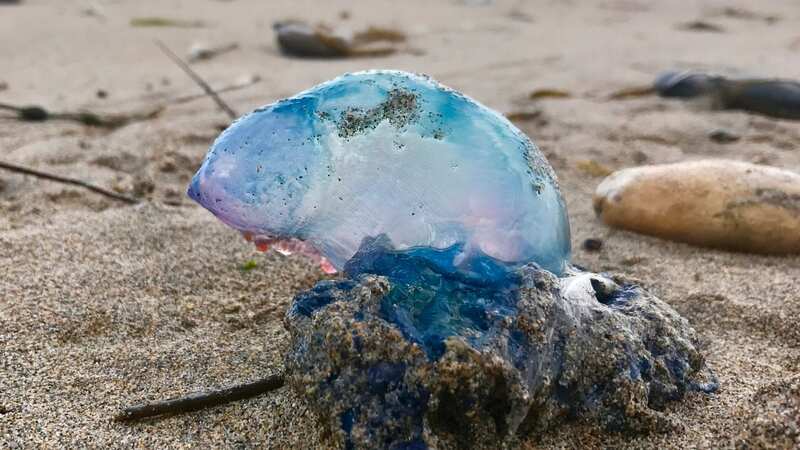
People enjoying winter walks along UK beaches are being warned to watch out for venomous sea creatures.
Portuguese man o' war, which look like jellyfish but are in fact siphonophores, have been washing up on the coastline of Gwynedd in North Wales. Vets are urging dog owners to be extra careful.
The striking-looking sea creatures, usually found in the Atlantic and Indian Oceans, are appearing more frequently on British beaches due to climate change.
Despite their beautiful blue, purple and pink colours, people are advised to keep themselves, their kids and pets away as these creatures are venomous and their sting can be very painful.
In some cases, a Portuguese man o' war sting has been strong enough to kill fish and even humans. North Wales Live reports that the Portuguese man o' war, a siphonophore - a colony of tiny zooids all working together as one animal, has been spotted on several beaches in the area. Local resident Peter Sinclair Gill said this year's sightings have been "by far the worst", adding: "Usually I spot one or two - but this year there have been more than a dozen".
 Furious chimp launches bottle at girl filming him leaving her bleeding at zoo
Williams Veterinary Surgeons also issued a warning to dog walkers to be extra careful on local beaches. They shared a photo of a Portuguese man o' war on a local beach, and said: "Be careful with dogs on the beach today in Tywyn and I've just seen posts [of Portuguese man o' war] in Barmouth also."
Frankie Hobro, Director of Anglesey Sea Zoo, revealed that he had been stung by a Portuguese man o' war - and doesn't have fond memories of the experience. She said: "While they cannot be considered deadly to humans, their sting is excruciatingly painful. It's something I can personally relate to, having been stung on the leg by one whilst working in the tropics, where encounters with these creatures are common. The pain can take several hours to subside. The tentacles leave whip-like reddish-purple welts on the skin which can be visible and sensitive for many days. On occasion the venom can cause severe reactions, resulting in serious medical complications. In some very acute cases, this can cause death, although this is extremely rare."
"It's something I can personally relate to, having been stung on the leg by one whilst working in the tropics, where encounters with these creatures are common. The pain can take several hours to subside. The tentacles leave whip-like reddish-purple welts on the skin which can be visible and sensitive for many days. On occasion the venom can cause severe reactions, resulting in serious medical complications. In some very acute cases, this can cause death, although this is extremely rare."
Portuguese man o' war are warm-water creatures that are rarely seen on UK shores, but occasionally they are blown here on westerly winds. They use a float filled with carbon monoxide and air to sail the oceans and trail 65-70ft tentacles to snare fish. Frankie predicts more will be heading to UK shores in the coming years as the seas warm. She said: "This year the Sea Zoo has been measuring seawater at temperatures of 21C. This is extremely high. Four or five years ago, the maximums were 18C-19C. Earlier this summer we had a marine heatwave over the western Atlantic and in the annual cycle, it's only now that the seas are starting to cool."
Frankie shared that exotics like Portuguese man o' war "typically arrive later in the year", and that the earlier arrival of westerly autumn storms appears to be bringing them over more regularly. Explaining what to do if you find one, she added: "If you find one, it is worth reporting it to your local Wildlife Trust and the Marine Conservation Society as they keep records. If you are concerned it poses a danger, or if there are a large number of them, the sighting should be reported to the local council, which will arrange appropriate disposal. But please do not attempt to move them yourself."
* An AI tool was used to add an extra layer to the editing process for this story. You can report any errors to [email protected]