Survivors of rare breast cancers with unusual symptoms issue warning to others
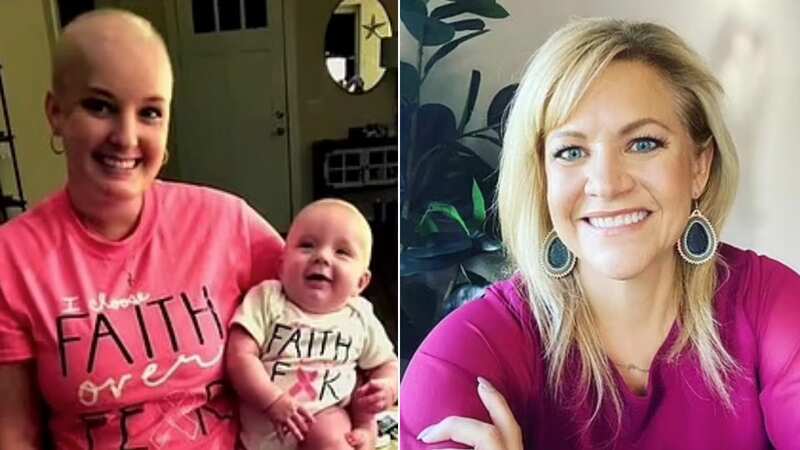
We all know the importance of taking some time each month to thoroughly check our breast tissue and chests for lumps that shouldn't be there. But sometimes, breast cancer doesn't start with a lump - there are other lesser-known symptoms of the disease.
Olivia Franz and Meadow Bailey were both diagnosed with less common forms of breast cancer, despite the fact that they didn't present with lumps, which is what usually prompts someone to seek medical help.
Olivia was just 27 years old when she received a diagnosis of stage 4 inflammatory breast cancer (IBC) after noticing a swelling in her breast whilst she was breastfeeding her son. But she was first diagnosed with mastitis, which is "when your breast becomes swollen, hot and painful", and usually occurs when breastfeeding, according to the NHS.
But when a course of antibiotics didn't help, her breast doubled in size, and she had discharge from her nipple, she had an ultrasound and biopsy leading to her diagnosis of IBC. According to Cancer Research UK, IBC is "a rare type of breast cancer" and it "develops quicker." The charity also highlights that "less than 5 out of 100 breast cancers (less than 5%) diagnosed are inflammatory breast cancers."
Olivia told Good Morning America: "It had spread to my bones. I thought, 'Well I'm going to leave a brand new baby alone with no mom.' And then my very next thought was, 'That's not an option'. He needs his mom and I'm going to do whatever it takes to keep myself here for him'."
 Warning as popular food and drink ‘increase risk of cancer death by up to 30%’
IBC is often harder to diagnose as it does get confused with mastitis, and the symptoms are rarer. This also means that it is often diagnosed later, and therefore has a higher chance of spreading to other areas in the body. Symptoms include swelling and redness of the breast, pain, swollen lymph nodes, firm or hard breast that is hot to the touch, skin that looks like an orange peel (peau d'orange), and changes to the nipple such as flattening or an inverted nipple, according to Cancer Research UK.
Meadow was called by doctors shortly after her 49th birthday, as they'd found "areas of concern" on her mammogram - but initially, she thought it wasn't a "big deal" as she was otherwise fit and healthy, reported the Daily Mail. Meadow was then diagnosed with stage 1 lobular breast cancer, a cancer that, like IBC, typically grows and spreads without forming a distinctive lump.
She said it "caught her off guard" because she felt okay and hadn't felt a lump in her breast. According to Cancer Research UK: "Invasive lobular breast cancer is the second most common type of breast cancer. It is also known as invasive lobular carcinoma. Around 15 in every 100 breast cancers (around 15%) are invasive lobular breast cancer." It can be difficult to diagnose due to the abnormal way the cells grow, making it harder to recognise on a mammogram.
Symptoms are also less common, including "an area of thickening or swelling, a change in the nipple, for example it might turn inwards (become inverted), and a change in the skin, such as dimpling or thickening", according to Cancer Research UK. The five-year survival rate of lobular breast cancer is nearly 100 percent when treated early.
Both women received specialised and breakthrough treatments at MD Anderson Cancer Center in Houston, Texas. Olivia has been cancer-free for three years and Meadow has been cancer-free for one year. They both urge others to pay attention to changes in their bodies, attend regular screenings, and advocate for your own health.
Read more similar news:
Comments:
comments powered by Disqus