PGMOL given two perfect examples to fix VAR as 'crucial element' emerges
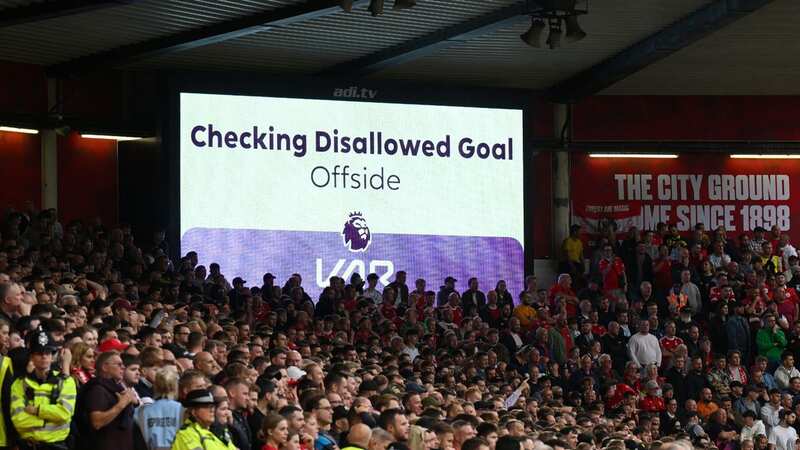
VAR has divided opinion ever since its introduction to Premier League football for the 2019-20 season - but it's taken a dramatic turn after a lengthy list of high-profile mistakes this campaign.
Arguably the biggest of them all took place last Saturday, when Liverpool saw a Luis Diaz goal wrongly ruled out in a chaotic clash with Tottenham that ultimately saw them lose 2-1. Miscommunication between VAR Darren England and on-field referee Simon Hooper led to the goal being ruled out in the Premier League fixture.
The fallout has rumbled on for several days now and it has left Professional Game Match Officials Limited (PGMOL) with huge decisions to make as to how they should solve this escalating crisis. But this isn't the first time that technology has caused controversy in sport.
Top-level sports including cricket and rugby now successfully use technology and are seen as perfect examples to football - but that wasn't always the case. Here, two Mirror Sport's experts give the lowdown on how rival sports have tackled technology and high-profile fallouts.
DEAN WILSON - CRICKET
The Decision Review System in cricket is now widely accepted as an essential addition to the officiating of top-level cricket with the process, the explanations and evidence for decisions accepted far more than ever before. But it wasn’t always this way. The system had lots of teething troubles when it came to the technology and the interpretation of the evidence.
 Chelsea complete record-breaking Enzo Fernandez transfer after deadline day rush
Currently there is a standard level of technology used with video footage and slow motion footage combined with ‘Real Time Snicko’ which marries pictures with sound to indicate whether a player has hit the ball or not. Plus ‘Hawk-eye’ predictive technology which uses the live tracking of the ball to within five millimetres to predict whether it would have gone on to hit the stumps in the case of lbw decisions.
In most cases there is obvious evidence whether someone is in or out on line calls for stumpings and run outs. There is also evidence on whether the ball has hit a batter on the pad in line with the stumps or not.
However the crucial element that works so well in cricket is the ‘umpire’s call’ on predictive lbw decisions. Essentially it gives the on-field umpire a bit of leeway in their decision making, appreciating that there remains a human element to decisions.
 The crucial element that works so well in cricket is the ‘umpire’s call’ on predictive lbw decisions (Getty Images)
Only if the umpire has got their decision obviously wrong is it overturned. The process is not infallible and is still being tweaked to this day despite first being introduced back in 2009 (although replays on runs outs were used as far back at 1992).
There used to be a ‘soft signal’ from the on-field umpires when it came to adjudicating low catches in the field and it would need something clear and obvious for the TV umpire to overturn it. Now the decision is entirely made by the TV umpire using the best evidence they have at their disposal.
Occasionally there are moments that even outfox the TV cameras and can lead to huge debate, but perhaps that is a good thing. Sport is a human contest and when there are subjective moments, the acknowledgement that the officials simply do the best with what they have should be good enough.
Cricket essentially accepts this and is far better for it. There is no doubt at all that player behaviour and flashpoints in games are reduced thanks to the technology, maybe apart from when the odd batter leaves their crease and is run out unsuspectingly...
ALEX SPINK - RUGBY
Rugby is often cited by football as a sport that has got it right when it comes to the use of technology - and showing respect to the officials charged with dispensing it.
The round ball game admires the efficiency of a system devised to accurately judge whether a try has been scored. To judge definitively whether the ball was grounded, whether a part of the scorer’s body was in touch or whether there was any infringement within the two phases prior to the score which would render it illegal.
Rugby’s VAR official, the television match official (TMO), is also free to communicate with the referee at any time if he suspects foul play and generally the system, which first appeared in 1999 and has been improved in the years since, is popular with players and fans alike.
 Everton chiefs face transfer backlash from fans after deadline day disaster
But Eddie Jones, the former England head coach now in charge of Australia, takes a very different view, railing against the increased stoppages in play that have resulted.
 Rugby’s VAR official, the television match official (TMO), is seen as a success (Getty Images)
“I think our use of the TMO in rugby is fraught with danger,” he said in the early stages of the Rugby World Cup currently underway in France. "They are asking a referee in the grandstand to make decisions on a different angle on the game, through video. It’s not making the game a better spectacle, it’s not making a better game for the players.”
Jones added: “You know the average ball-in-play is 30 seconds, the average break-in-play is 70 seconds, so you encourage a power contest. We need more continuous play. We really need to improve the game.
“World Rugby have tried to make the game safer but they’ve made it more powerful, by having more stoppages in the game. And there’s risks to that, there’s risks when the game becomes more powerful.”
There is huge merit in what Jones says and although the TMO undoubtedly has removed numerous injustices, it is undeniable that it has come at a cost. As he says: “It’s really fascinating where the game will go next.”
Read more similar news:
Comments:
comments powered by Disqus