All you need to know about Covid as virus spreads again in UK

Yet another Covid variant is circulating around the UK, keeping scientists and health chiefs on their toes as the country approaches another winter facing threats of a ‘twindemic’.
Britain lost over 194,000 people who died with Covid on the death certificate during the pandemic. Most of these people passed before the vaccine was developed and rolled out nationwide, offering significant protection against the virus, but emerging variants and subvariants continue to throw up challenges.
Even though the worst is behind for most of the country, Covid is still ever prevalent and cases are on the rise as the weather gets colder. Data released by the UK Health Security Agency (UKHSA) showed hospital admissions for patients who tested positive for Covid-19 stood at 4.6 per 100,000 people in the week to September 10, up from 3.7 per 100,000 the previous week. This was the highest since the week ending April 30.
A new variant, BA.2.86, also known as Pirola, has recently caught the attention of health chiefs after it appeared in the UK, with over 30 mutations to its spike protein. It’s the latest in a long line of variants - but since the days of Beta, Lambda and Omicron a lot of the rules have changed around mask wearing, testing, and vaccines. Today, whilst the legal restrictions are long gone, Covid is still infecting thousands of people a week.
Are you worried about the rise in Covid cases? Vote in our poll HERE to have your say.
 Long Covid symptoms - 23 most reported signs from palpitations to vertigo
Virologist Stephen Griffin told the Mirror that the latest variant had rightly set "alarm bells ringing" after spreading around the world and taking root in Britain. He added that it was proof Covid showed "no signs of stopping" and even if it didn't take off could easily be the "forebearer" for something worse.
Here’s everything you need to know.
Variants:
Pirola, BA.2.86., has hit the headlines since first appearing in the UK in mid-August. Even though it only has just over 50 cases, the variant has over 30 mutations on its spike protein, and was first recorded seemingly already transmitting internally in the country. It was responsible for an outbreak in a recent care home, but early indications are that it isn’t set to be more dangerous than previous variants.
Omicron is still the dominant strain across the UK with a number of its subvariants spreading still. EG.5.1 is the most prevalent variant across the UK, making up over 35 per cent of cases. After that, XBB.1.16 represents nearly a third of Covid cases across the UK, having once been dominant itself. However, EG.5.1 has been steadily increasing since earlier this year, and is seemingly only trending upwards for now.
Traditionally, variants come in waves, and have since alpha, back in 2020. Originally, one variant would peak near, or approaching, 100 per cent of Covid cases but this year especially has seen a drop off in that pattern, with peaks only just reaching over 50 per cent before being replaced by another variant or subvariant.
Beyond Omicron and its subvariants, there are a number of other variants, subvariants and lineages spreading across the UK. As of September 14, England’s most common variants are:
- Omicron EG.5.1 - 37 per cent of cases
- Omicron XBB.1.16 - 30 per cent of cases
- Omicron XBB - 24.5 per cent of cases
- Omicron XBB.1.5 - 5.5 per cent of cases
- Omicron CH.1.1 - 1.8 per cent of cases
Testing:
Covid tests were, at the peak of the pandemic, free and an integral part of people’s lives, testing before they ventured out, visited loved ones, or as they went about their days. However, since then they’ve been limited to a restricted number of groups, leaving most of the country to buy their own Covid tests. Only people who work in healthcare or hospices, or have a health condition that means they’re eligible qualify for free tests now.
In those instances they can be ordered for free from the NHS website, but most people will need to visit their local pharmacy to buy a pack. However, there is no legal requirement to keep splashing out on the tests and to keep testing.
Similarly, if you do test positive, you can go freely about your day. But check with your employee what your work’s rules and requirements are in terms of going into the office, or with friends and family if you’re visiting them.
Vaccine and booster programme
This autumn has seen the second annual Covid booster jab programme rolled out for certain groups. Not everyone is eligible for the jabs, but the entire programme was rushed forward three weeks after the discovery of Pirola.
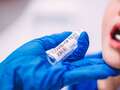 Covid infections spike in children but cases in the UK at its lowest in 4 months
Vaccinations began on September 18 and the hope is it will provide the public with enough protection to prevent a widespread outbreak over the winter, easing pressures on the NHS.
However, patient group National Voices have taken aim at the government and public health bodies for what it described as serious "concerns" over the booster rollout. Representing patient charities and professional bodies, the group said that "insufficient" communications had been one role leading to unnecessary extra pressure on frontline works and "ultimately avoidable hospitalisations".
Jacob Lant, Chief Executive of National Voices said: “The VCSE sector is concerned how the Autumn/Winter Flu and COVID-19 vaccine rollout for 2023-2024 has been conducted, and how this may affect immunocompromised people who need to receive the vaccine, and frontline staff working to deliver it. Our members feel the responsibility of highlighting the Autumn booster rollout has fallen on them, with insufficient support from DHSC and NHSE."
Pirola:
The latest variant raised alarm amongst health professionals due to the number of mutations on its spike protein. Viruses will always be mutating, but these are often of little or no effect, or can even be bad for its survival. However, sometimes, they offer protections for it, or help it spread easier.
As some of the vaccines target the spike protein, there were worries that these mutations could make Pirola more evasive. However, the latest data from the UK Health Security Agency suggest that it is similar in antibody escape to XBB.1.5 - the current fourth most prevalent variant in the UK.
Due to its current low numbers, and a lack of data, it isn’t clear just how widespread Pirola will become. As of September 18, there were 48 cases in England, with a further six in Scotland, and none recorded in Wales and Northern Ireland.
Cases have been found in London (7), east of England (1), North East (2), North West (3), South East (1), South West (1), and the West Midlands (1). The majority of these cases were from a care home in Norfolk, of the other only two were thought to have been epidemiologically linked and two other cases have an unknown region.
Ten of the cases have been in a hospital, and two in an emergency department as well. As yet, there are no known deaths for hospitals. The UK has the most BA.2.86 cases worldwide accounting for over a third globally.
Professor Griffin told The Mirror: “It [BA.2.86] has obviously successful because it’s spread round the world, it’s only just emerged into people we know that … so it’s managed to spread round the world very quickly against the background of hugely successful Omicron XBB variants. The idea that it’ll burn out could happen, but I suspect it won’t … if you look back, the delta variant was quite similar at the beginning and it had fits and starts, before it really got going.
“It could reach critical conditions. There are very few sequences at the moment but testing bias is very poor. It could be a matter of time [until case numbers take off], it could be it doesn’t become very much itself, but it’s another sign we can’t consign this to being a seasonal flu. It’s really hard to tell the future with that, if nothing else it’ll be a forebearer for other variants that could outcompete the XBB’s … we keep saying this, we keep seeing these jumps in evolution for the virus, and it shows no sign of stopping.”
Covid research:
A study, published this summer in the journal Nature, found that around ten per cent of the population carry a gene that could be key in fighting back against Pirola or any future variants.
It allows them to identify and eliminate the virus before they even start to develop symptoms. Similarly, they associated it with being significantly more likely to suffer asymptomatically from Covid as well. This meant that whilst they would be spreading it without knowing, they wouldn’t be suffering from Covid at all so wouldn't be facing serious or severe infections.
Professor Griffin admitted he was “staggered” by the current approach to Covid, pretending it was a seasonal virus despite having already had a number of waves so far this year. He said: “The perception we’re done with it and the narrative of having to live with it is another way of saying we’re willing to deal with the damage it does.”
This he said, included 14,000 deaths with Covid on the death certificate so far this year, long Covid, and hundreds of thousands of vulnerable people having their lives continually upended. He added: “It’s the opposite of the Emperor’s new clothes, it is there, it’s killing people, and we’re not talking about it. None of these elements keeping Covid where it is are stable, and immunity will wain and things can get worse."
He also said that people were too focused on individual risk, ignoring how everyone’s actions affected the wider public’s response.
Read more similar news:
Comments:
comments powered by Disqus