Man blamed seeing wife give birth for 'psychotic illness'
An Australian man unsuccessfully tried to sue a hospital for $1 billion AU (£520m) after he claimed seeing his wife give birth gave him a "psychotic illness."
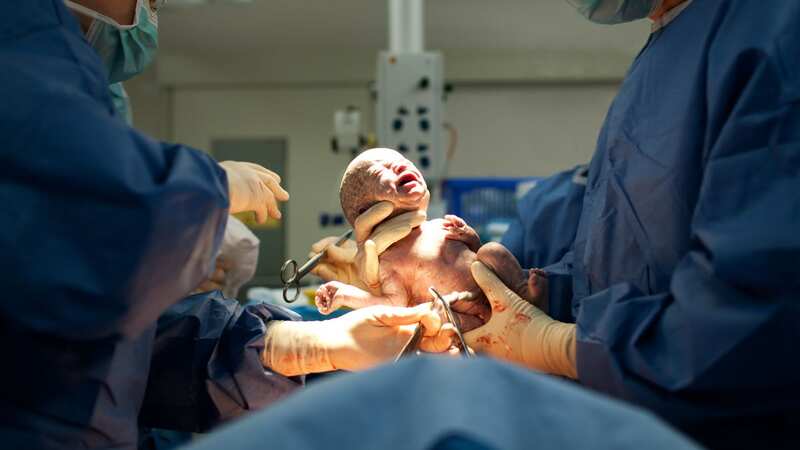
Anil Koppula's wife delivered a healthy baby via cesarean section at the Royal Women’s Hospital in Melbourne in 2018, but he subsequently said that the procedure led to a mental breakdown that ended his marriage. Years after the birth, he lodged a claim in the Supreme Court of Victoria alleging the hospital breached its duty of care it owed to him after he saw his wife’s "internal organs and blood."
Koppula, who chose to represent himself in the lawsuit, was unsuccessful in his claim in which he alleged that he was "encouraged, or permitted, to observe the delivery." On Monday, Justice James Gorton dismissed the claim, labelling it an "abuse of process." According to the judgement, the law does not allow a person to recover damages for non-economic loss unless their injury is a "significant injury." Koppula underwent a medical examination, with a panel determining that "the degree of psychiatric impairment resulting from the injury to the claimant alleged in the claim does not satisfy the threshold level."
Caesarean-section deliveries, also known as a "C-section", are very common and are carried out when doctors consider it dangerous for a woman to give birth vaginally. The NHS explains that a cut is made in your tummy and womb, just below your bikini line and then the baby is lifted out the baby directly. Around 1 in 4 pregnant women in the UK have a caesarean birth.
Women are often permitted to have a partner with them during the procedure for support and to watch the birth of the child. Most caesareans are carried out under spinal or epidural anaesthetic. This means you'll be awake, but the lower part of your body is numbed so you will not feel any pain. The whole operation normally takes about 40 to 50 minutes.
 Missing radioactive capsule found after huge search - and it's the size of a pea
It is rare for partners watching the procedure to have negative side effects. A 2004 article published in the International Journal of Obstetric Anesthesia argued that partners can experience "significant" trauma, "even if the outcome is not an injured mother or neonate." Koppula said he disagreed with the medical panel’s determination but did not file paperwork to challenge the findings.
"I am therefore satisfied that the legal effect of the Medical Panel’s determination is that Mr Koppula is simply unable, as a matter of law, to recover damages for non-economic loss", the judge said.
Read more similar news:
Comments:
comments powered by Disqus